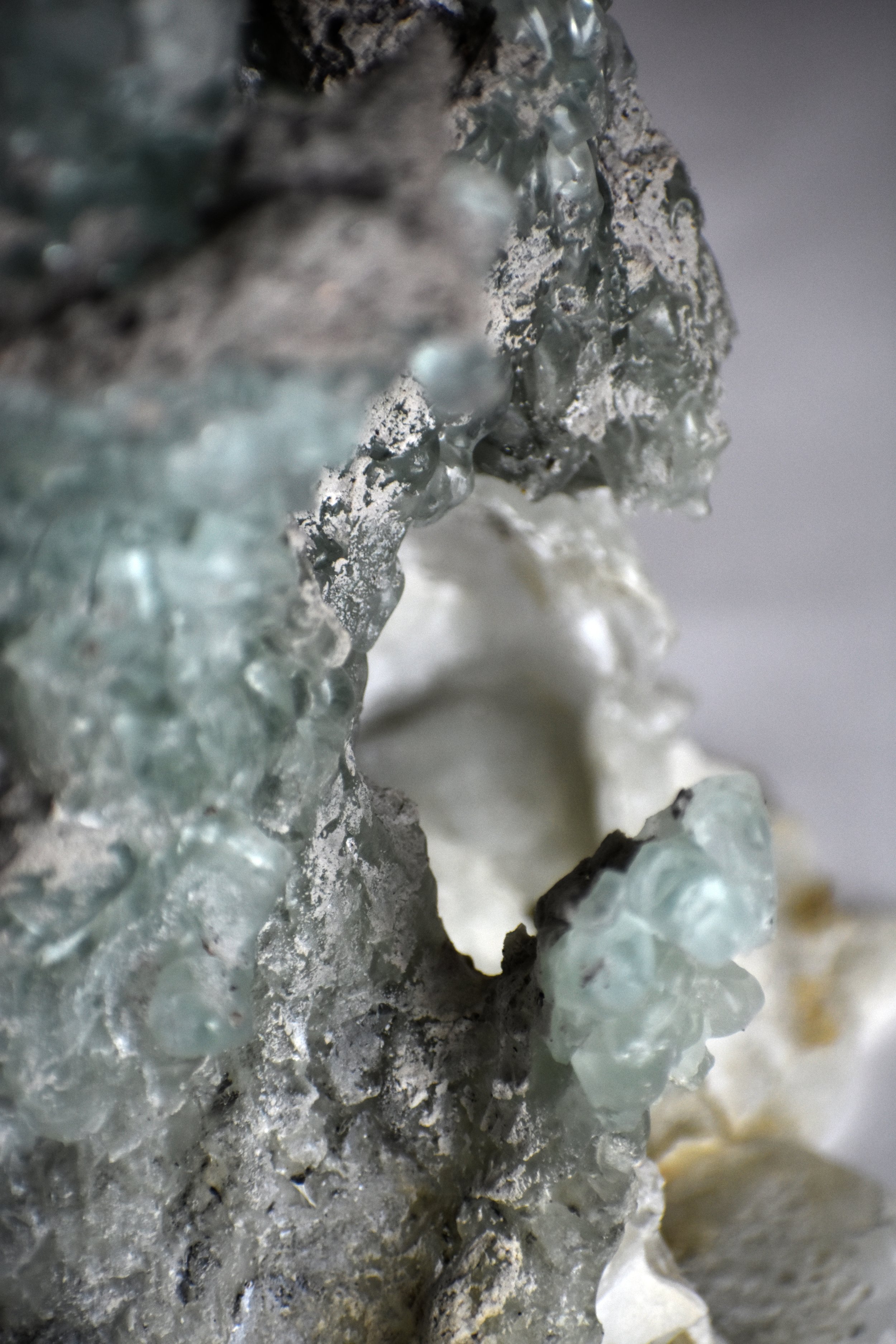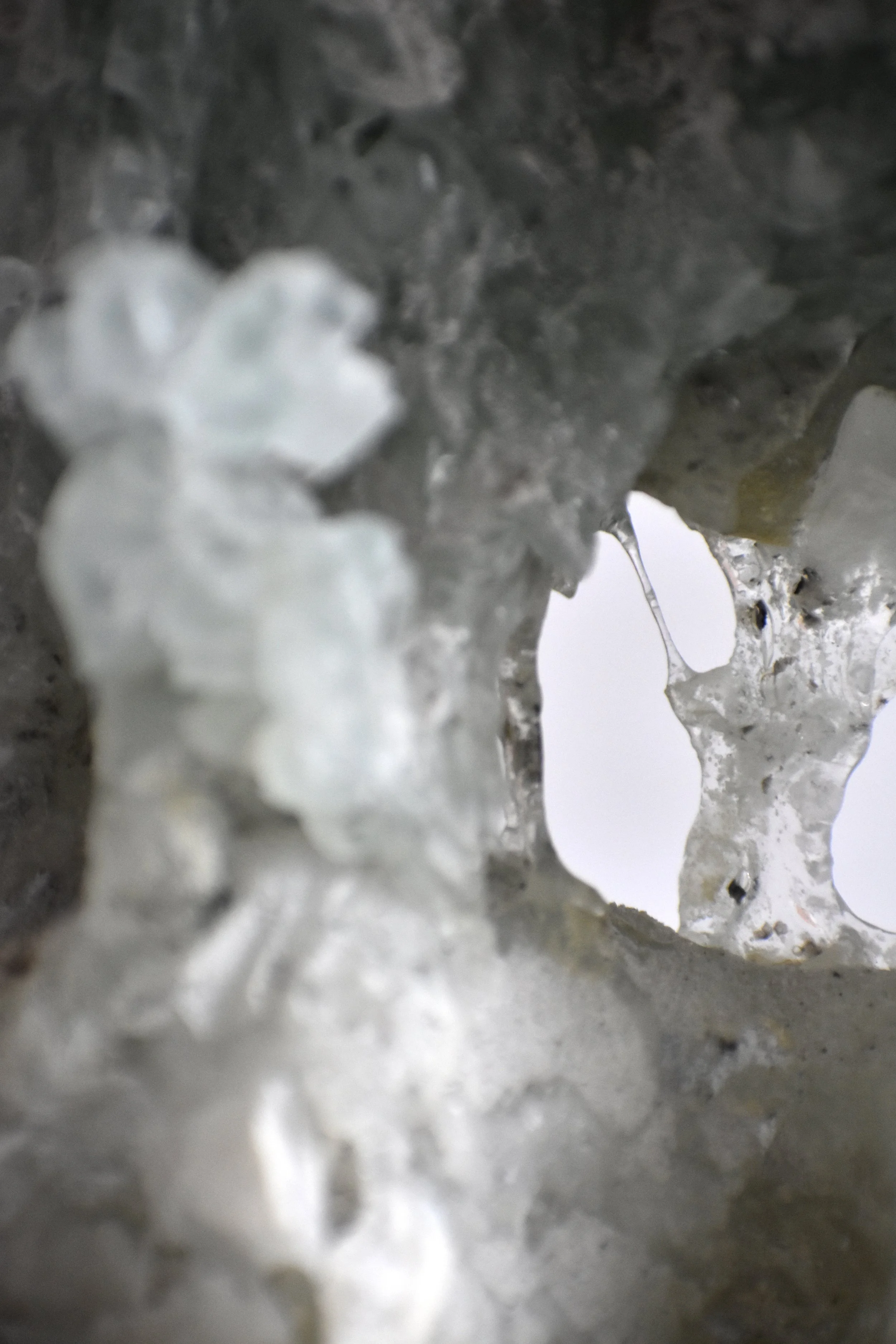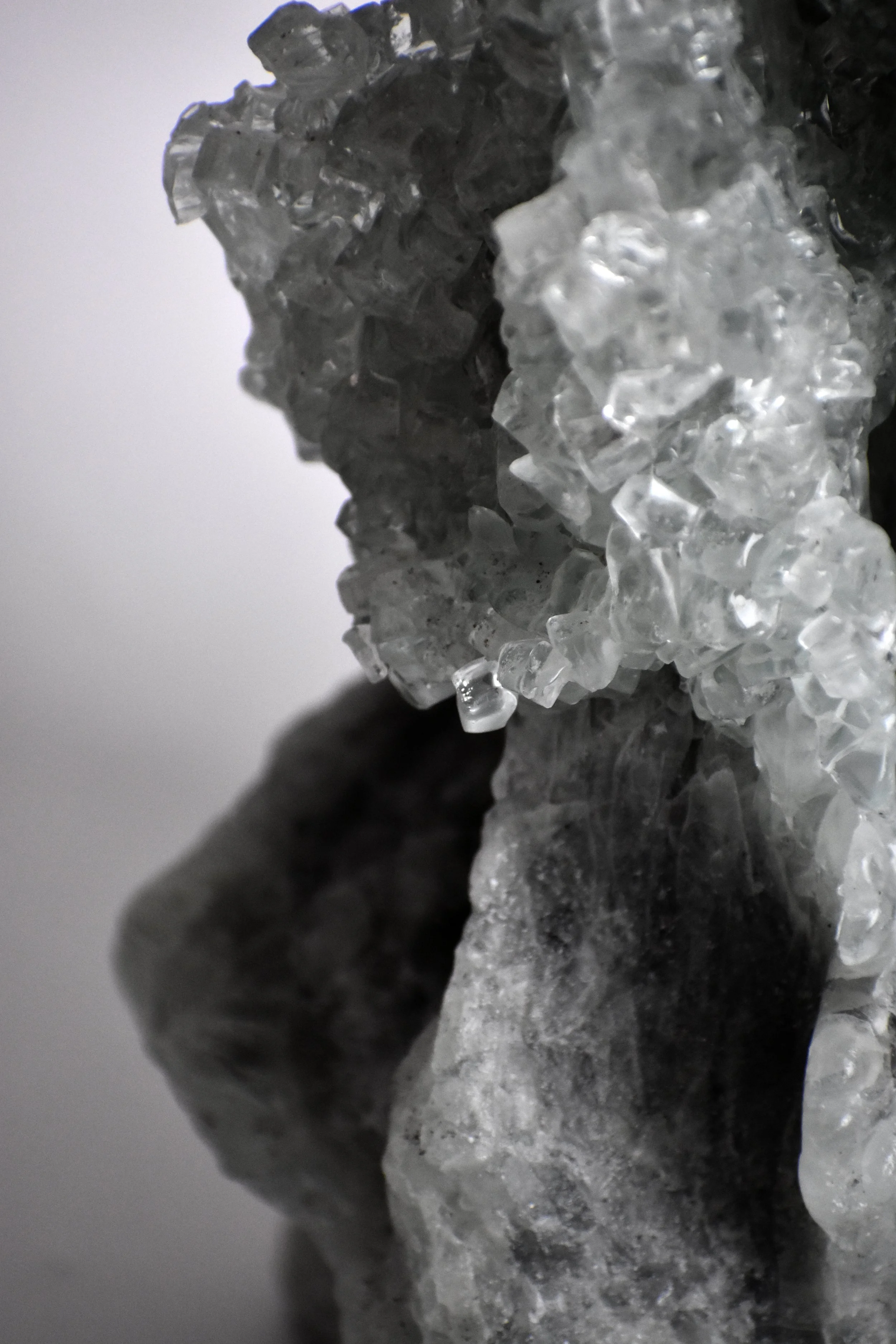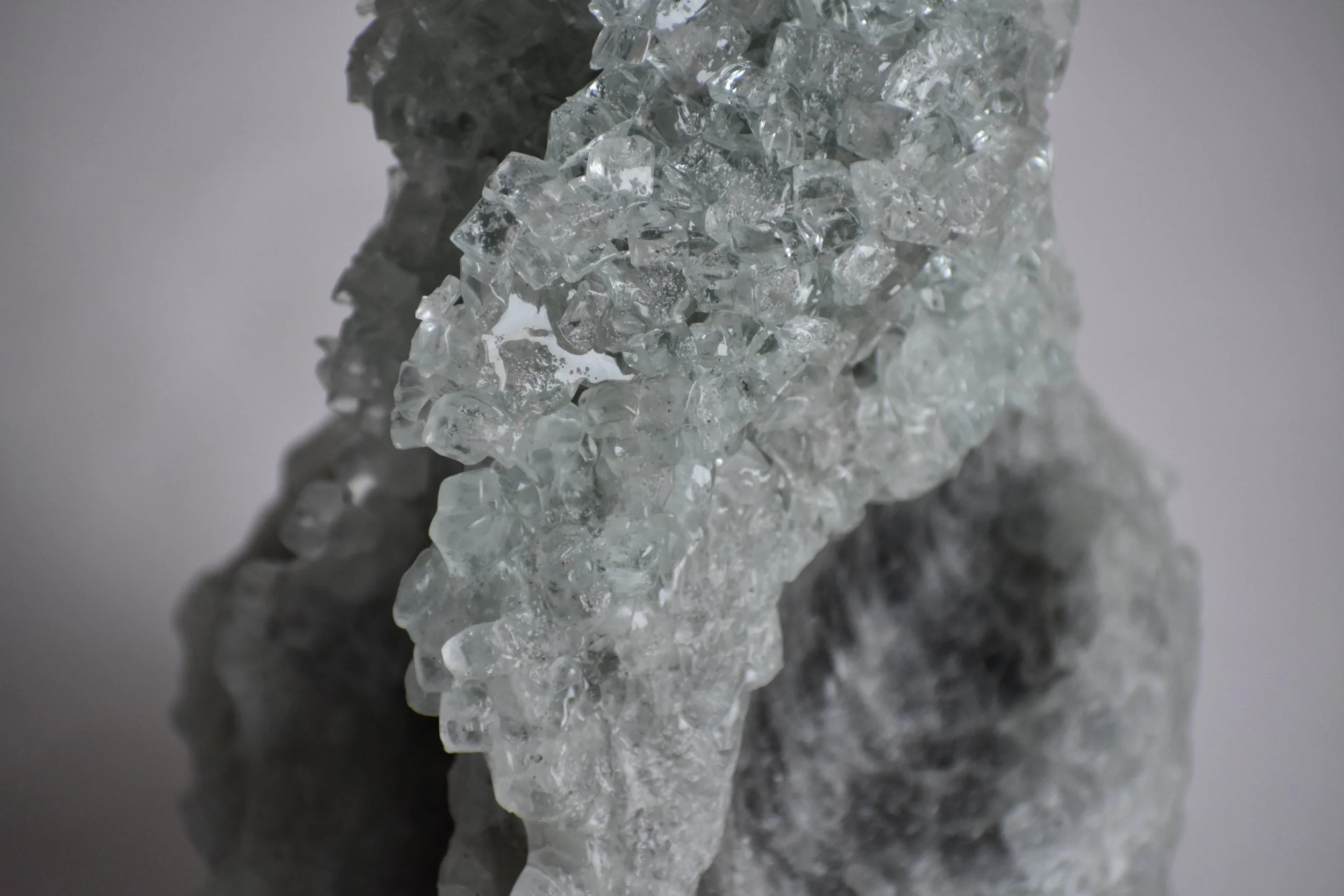
(Trans)formation as artistic methodology
11/2025 - ongoing
I am currently pursuing a doctoral degree from Hasselt University in collaboration with PXL-MAD MAD Research.
My research is funded by the Research Foundation Flanders (FWO) through a fundamental research mandate
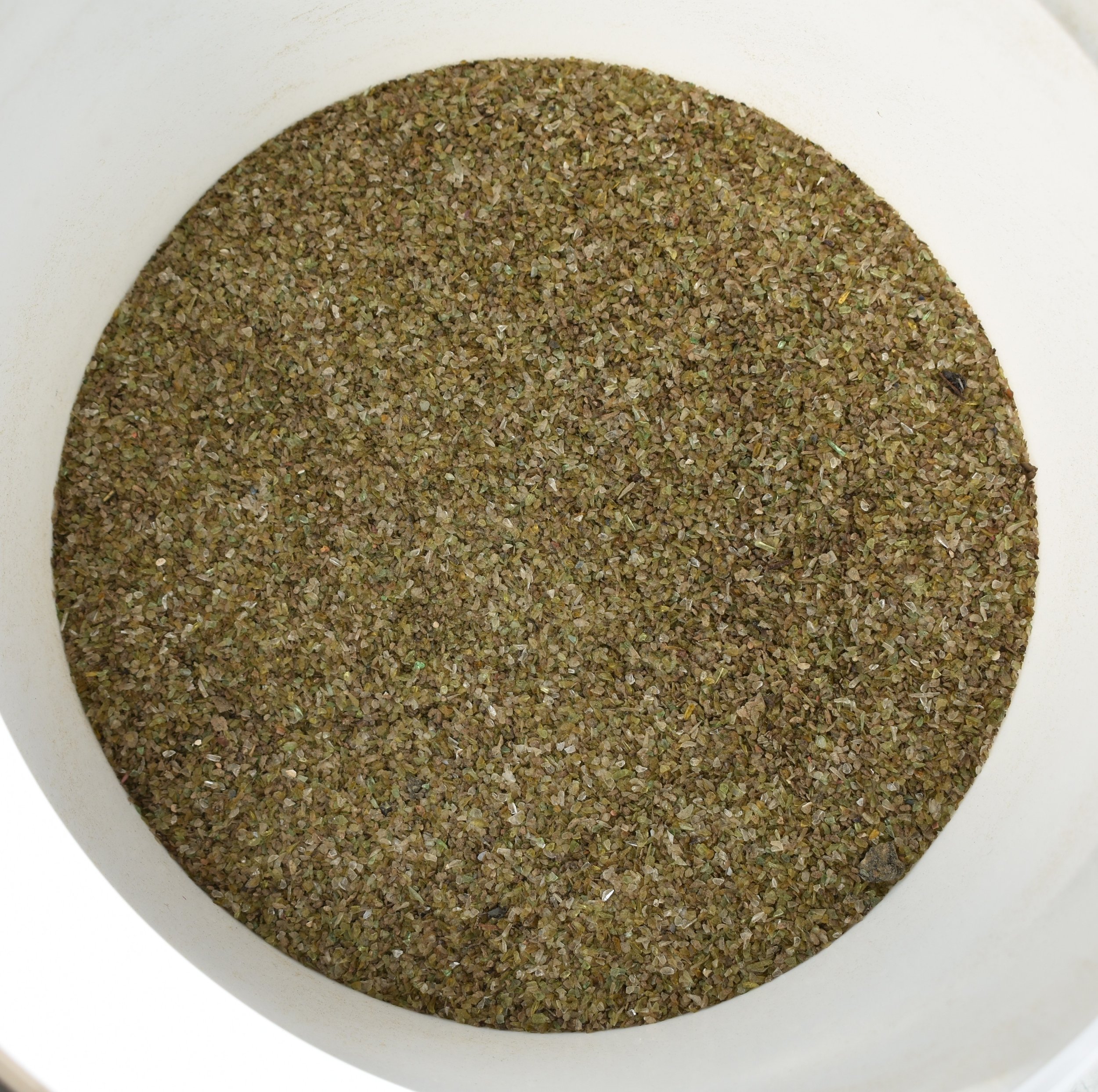
This doctoral research investigates (trans)formation as an artistic research methodology and confronts the ethical paradox of artistic practice within the Anthropocene, as artists depend on the same extractive systems they critique. This paradox is particularly evident in glassmaking, a practice dependent on silica sand extraction and energy-intensive kiln firing processes.
The research engages with the abstract nature of landscape change, as it unfolds across vast temporal and physical scales, rendering its consequences difficult to fully grasp and experience.
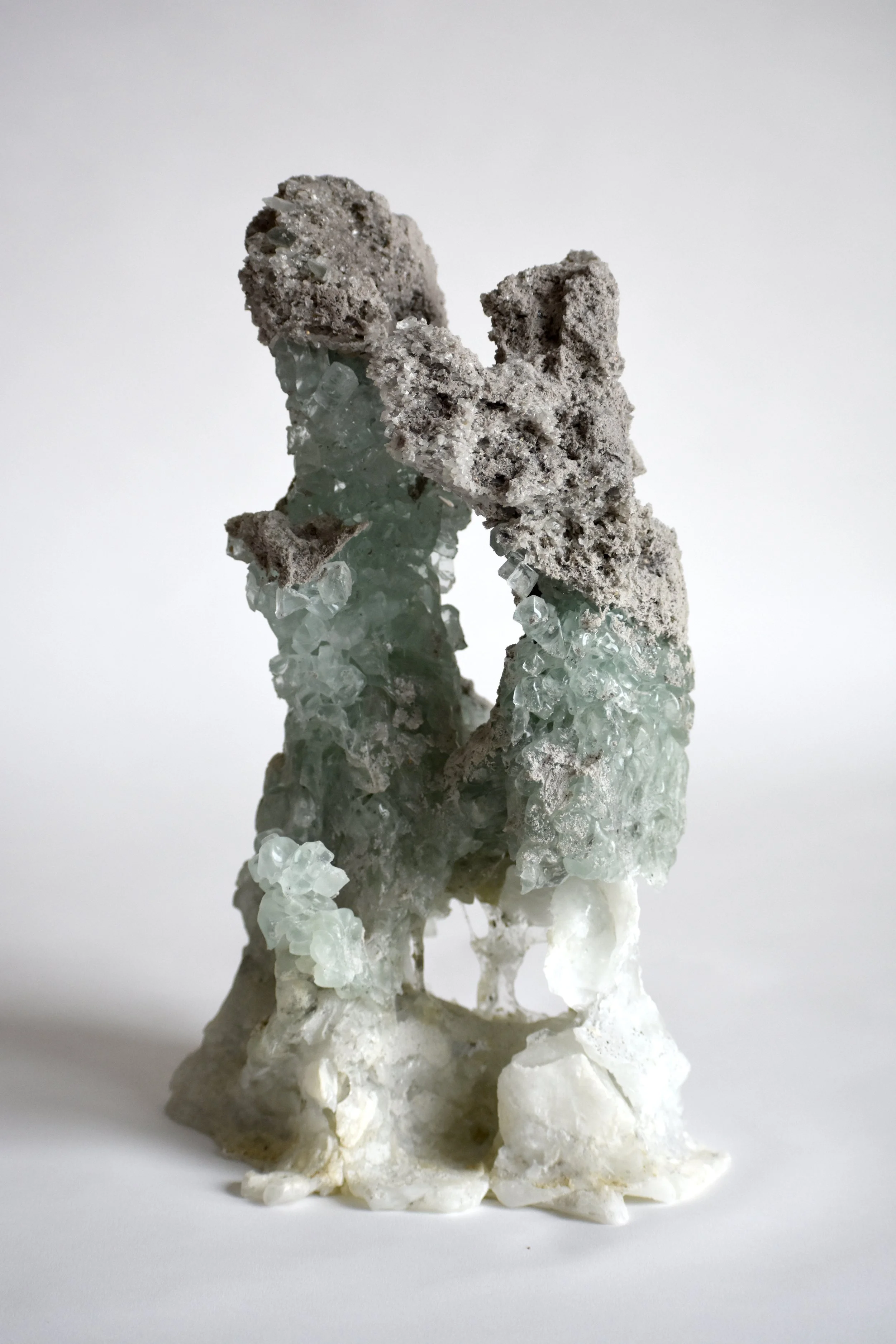
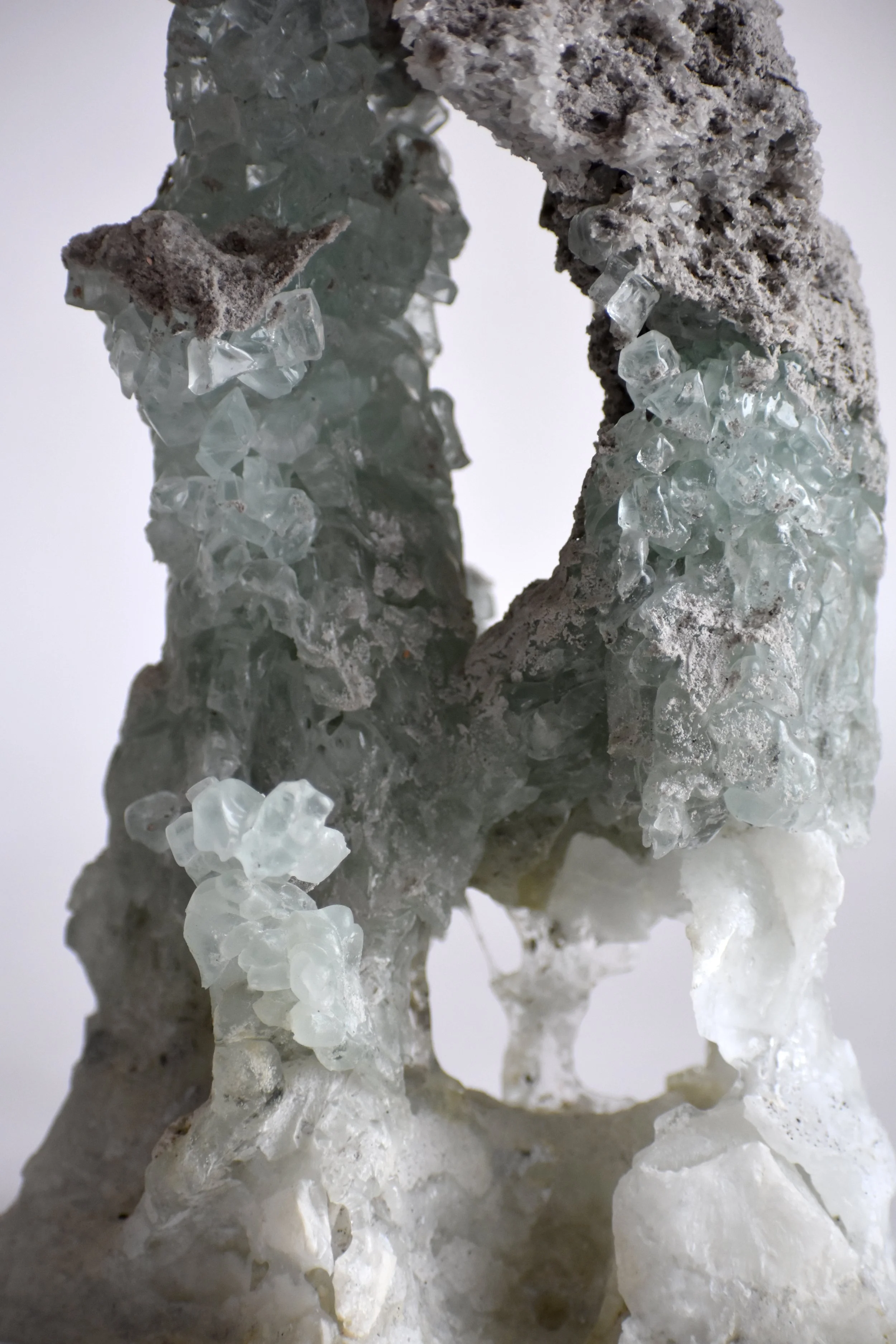
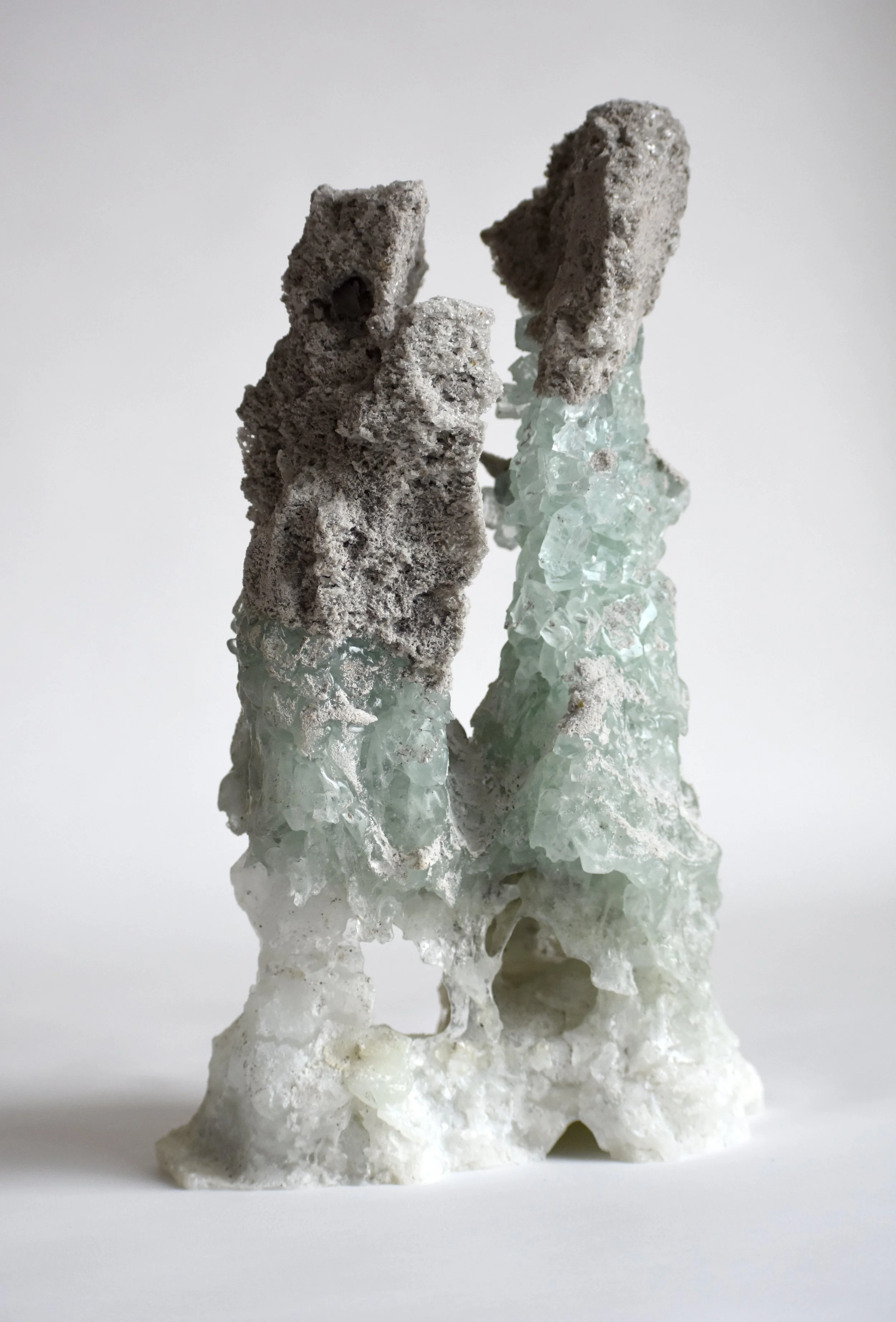
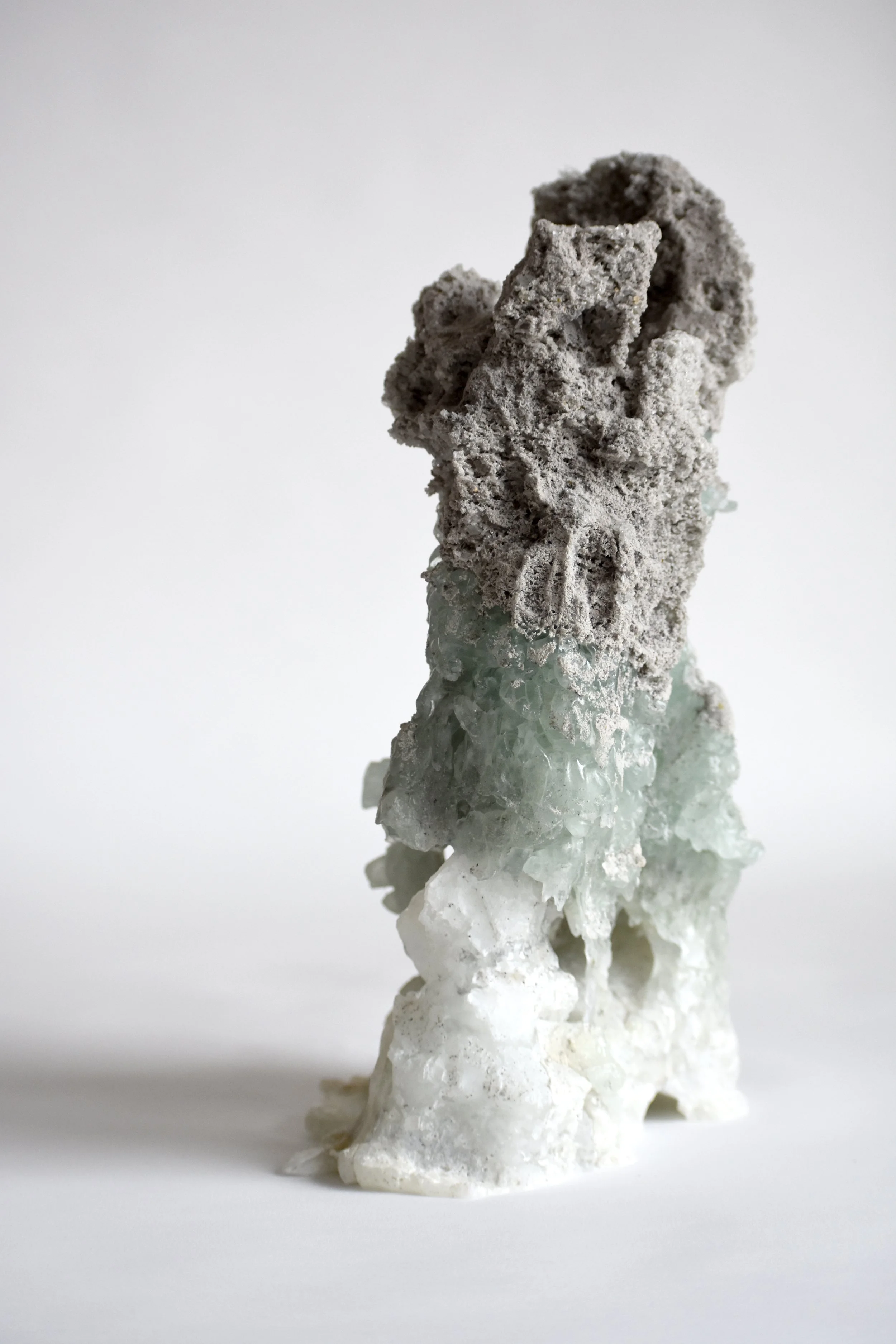
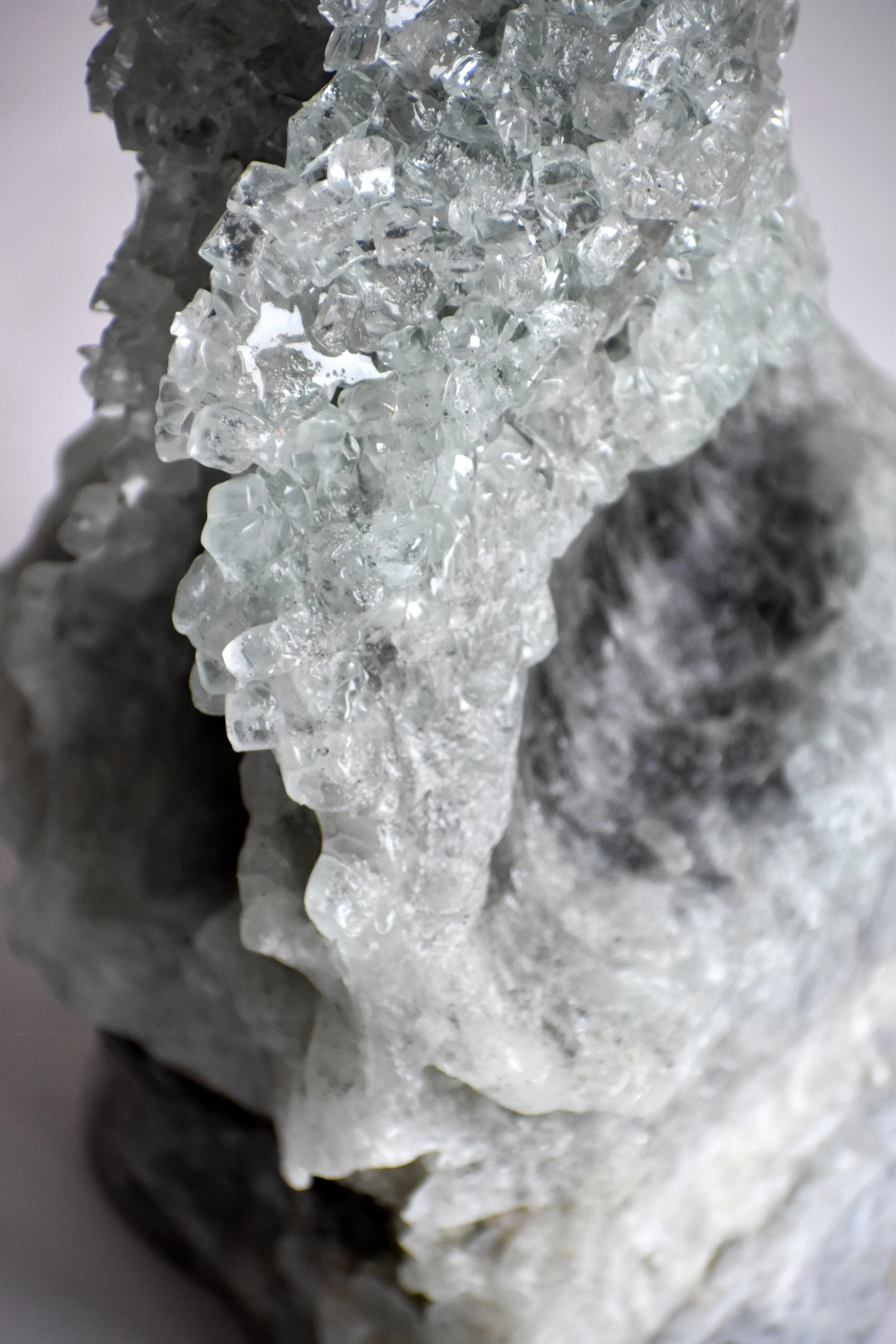
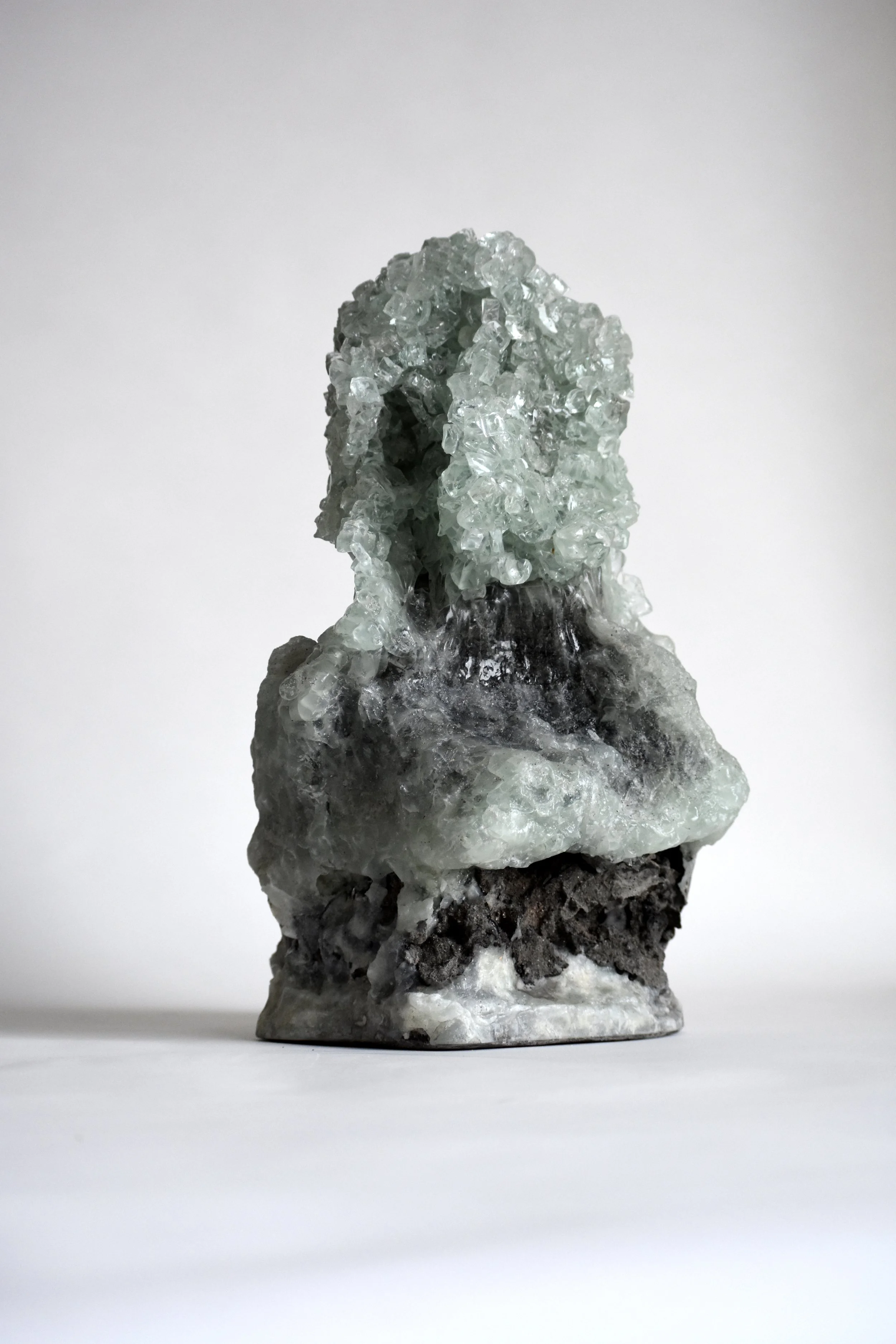
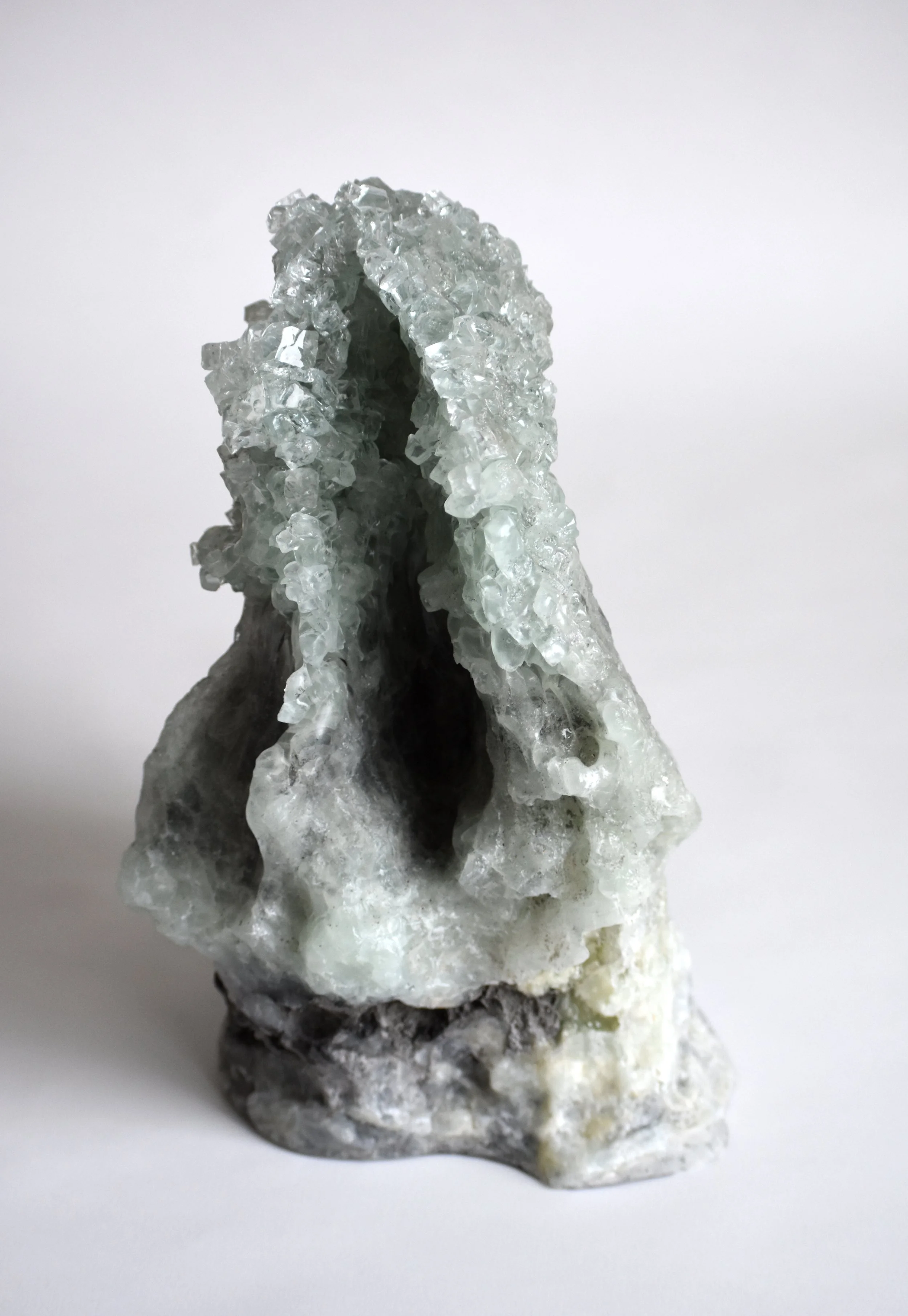
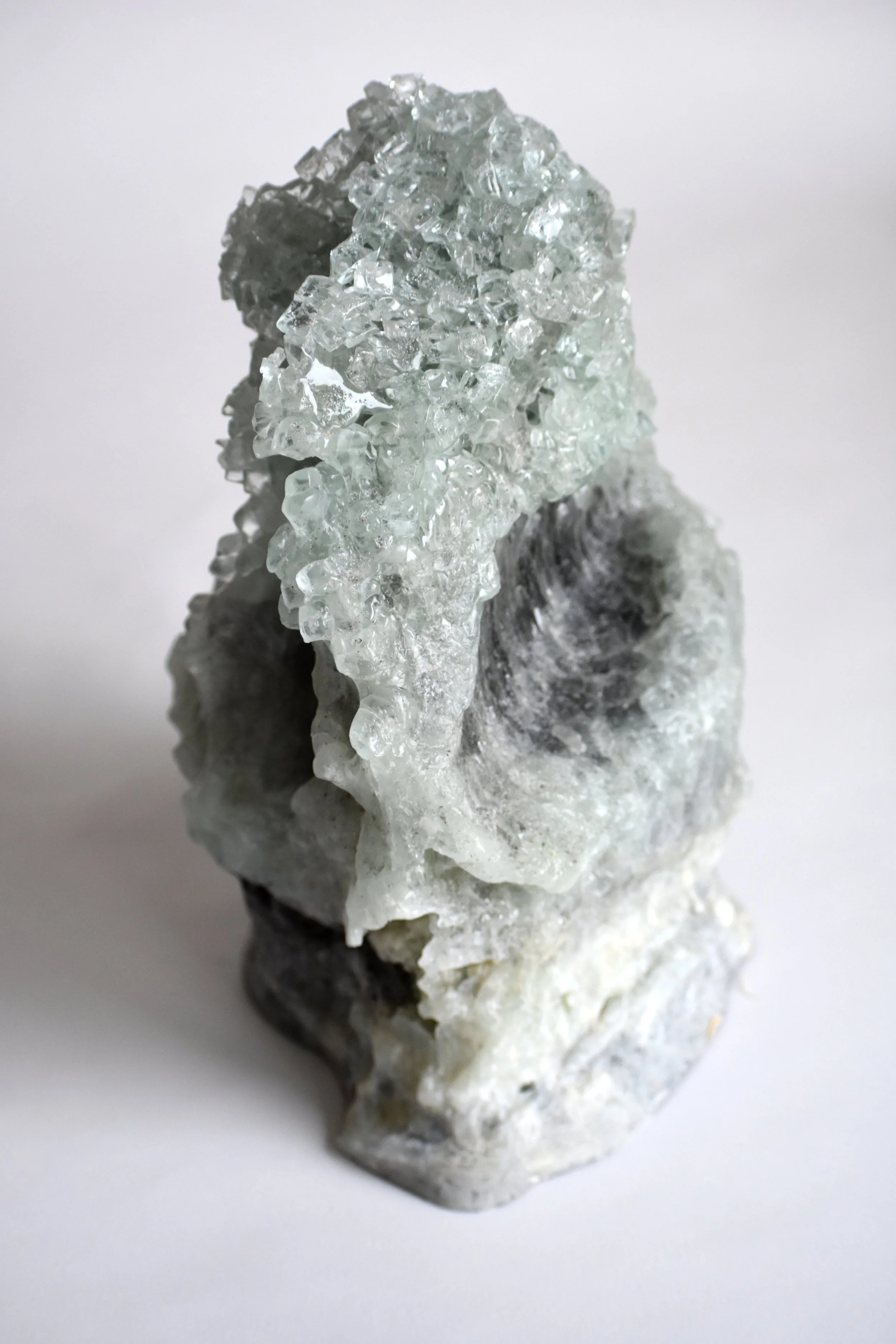
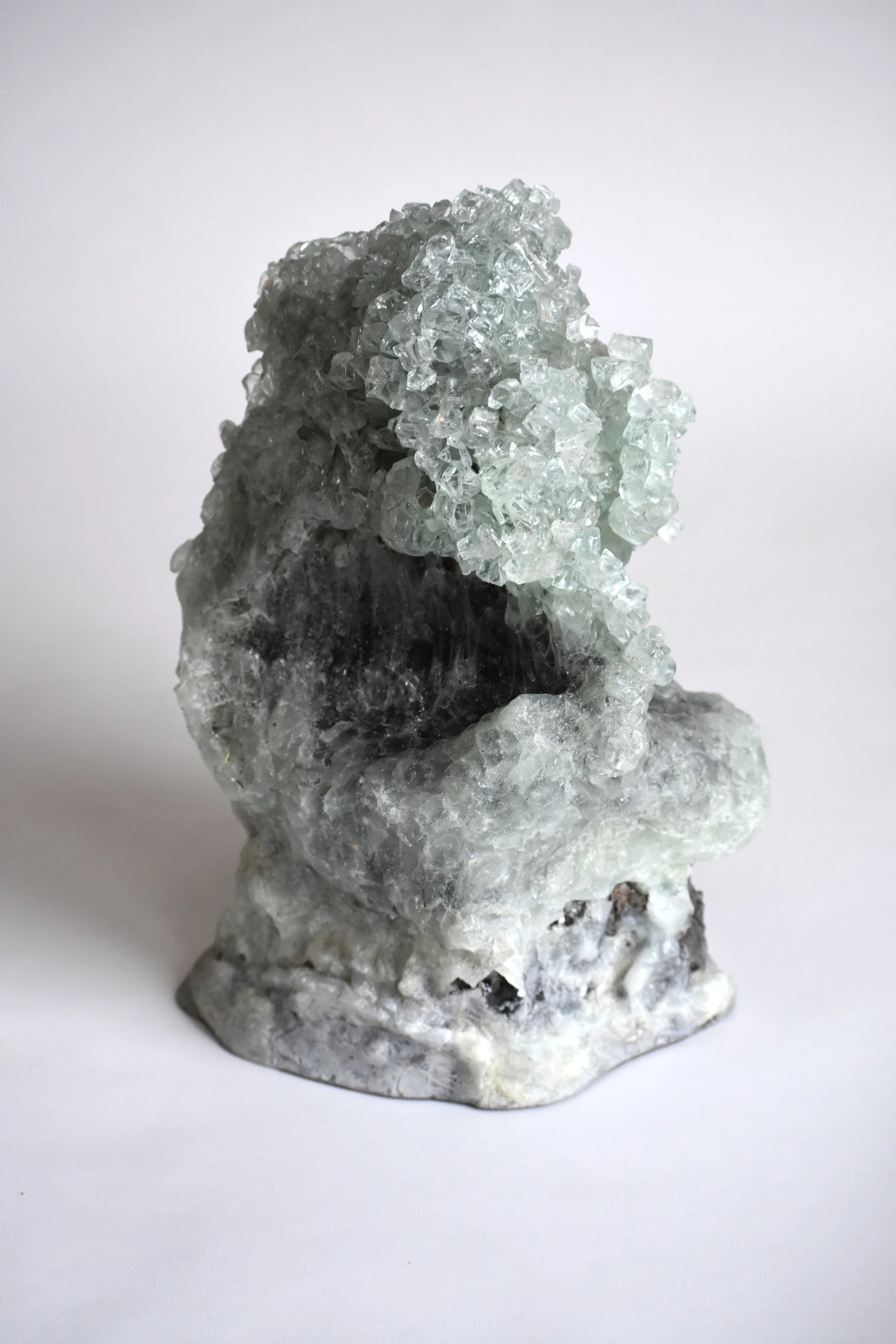
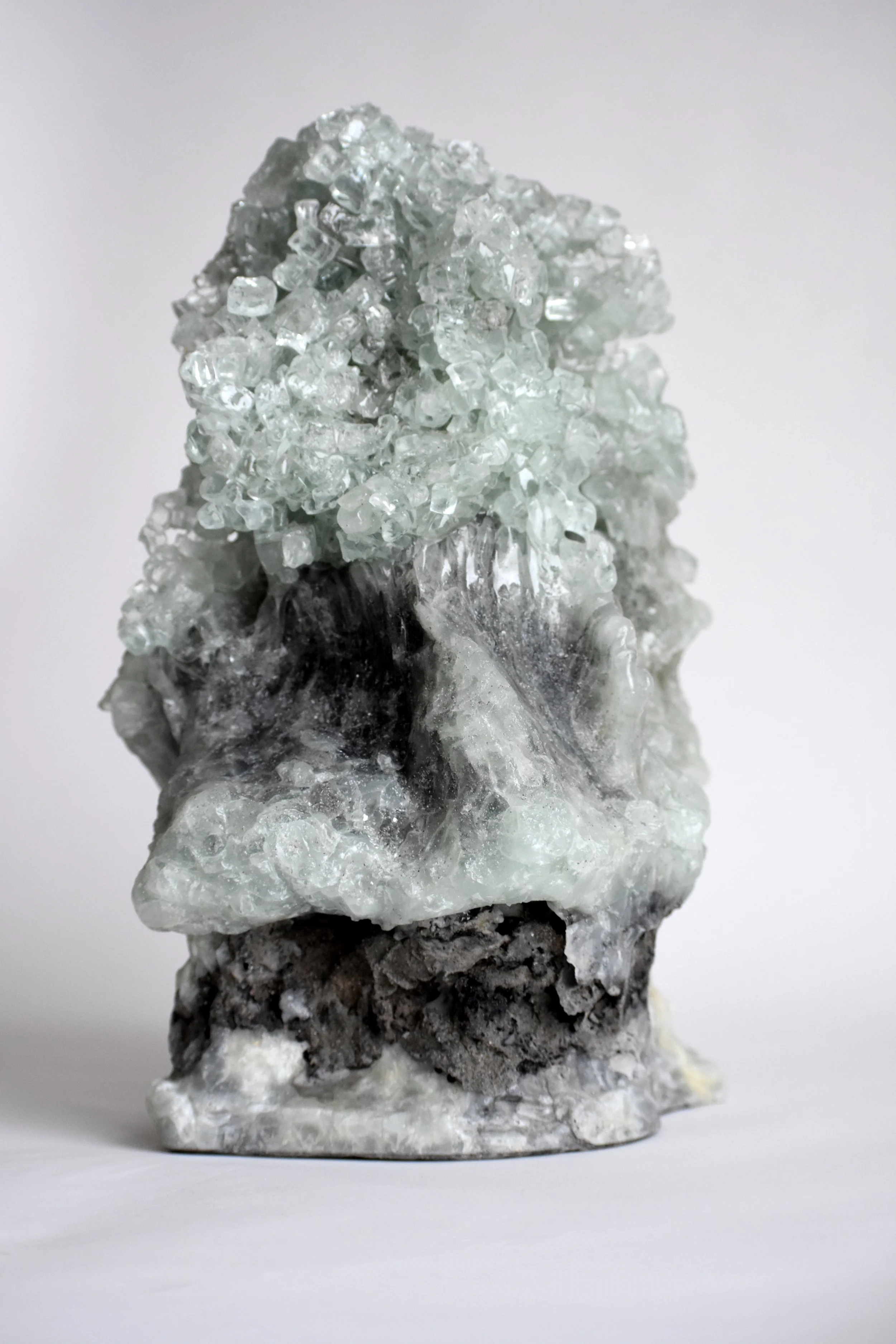
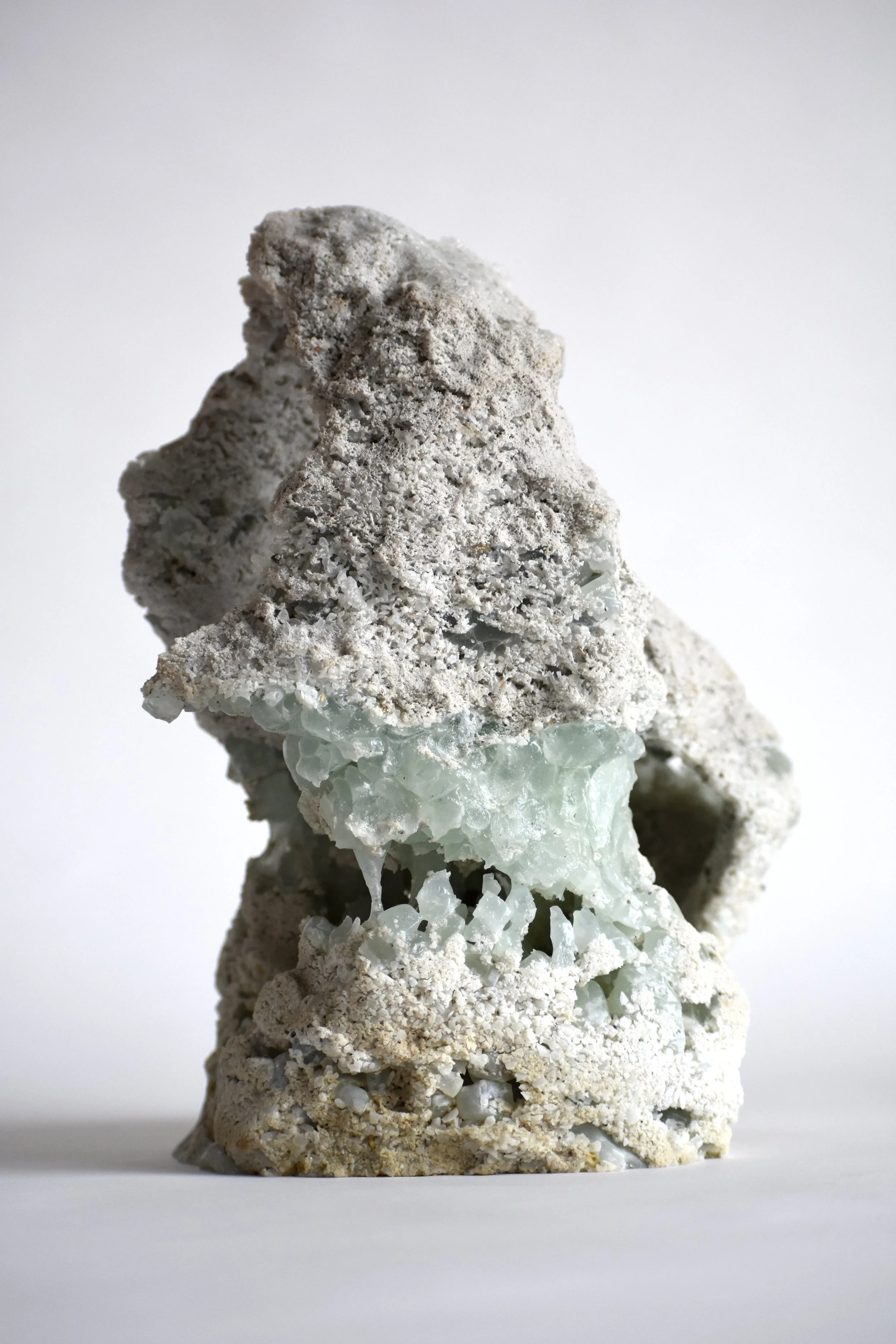
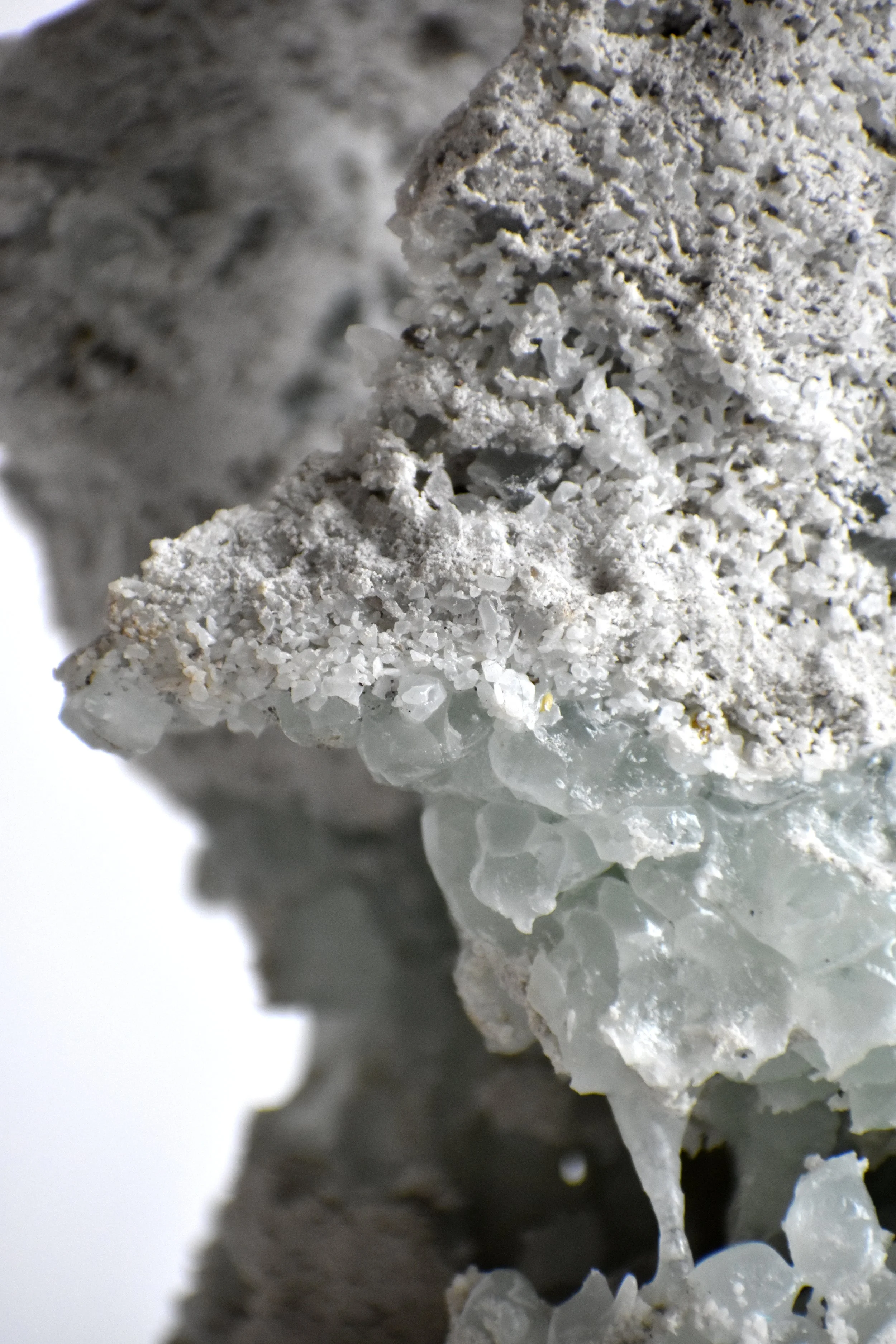
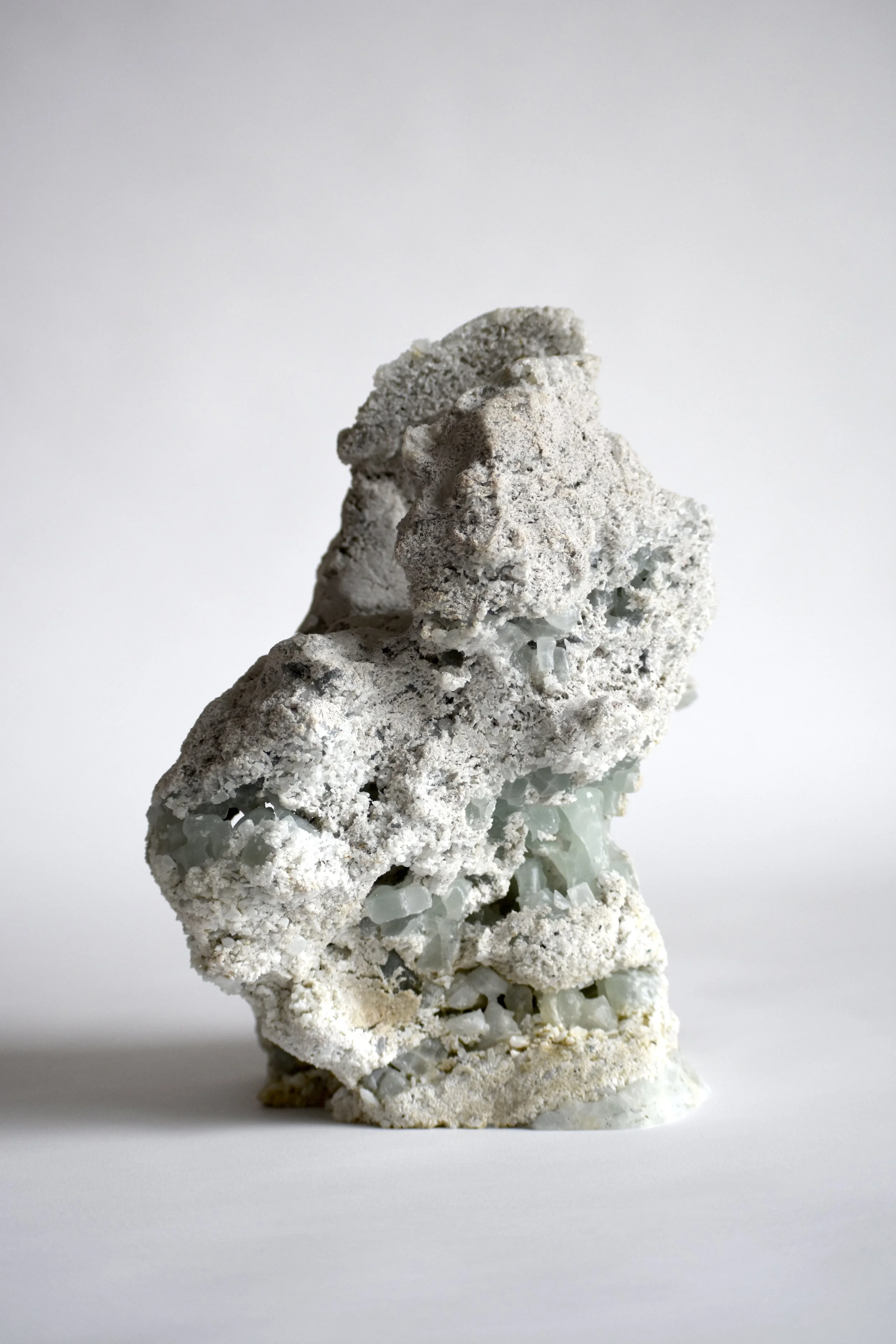
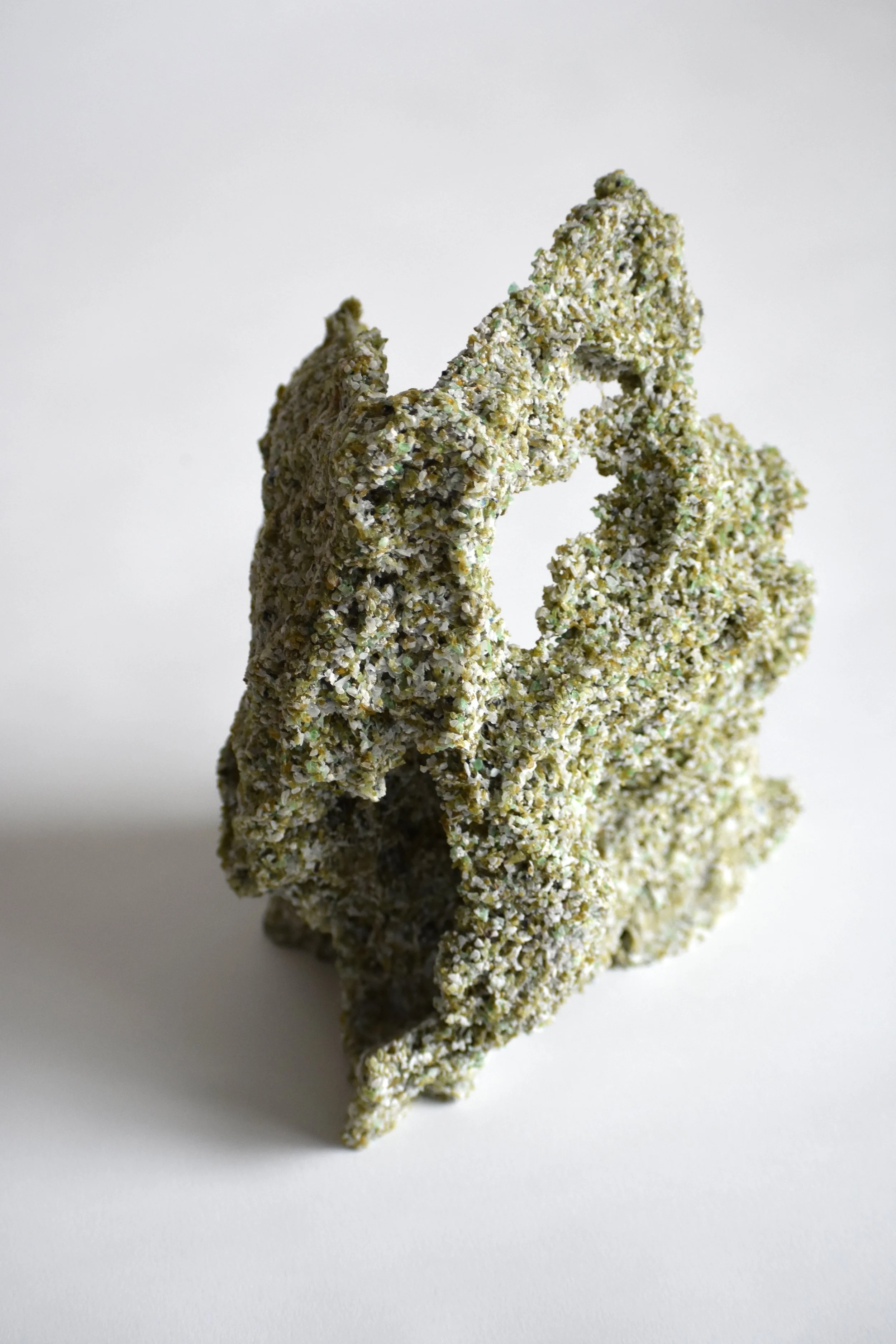
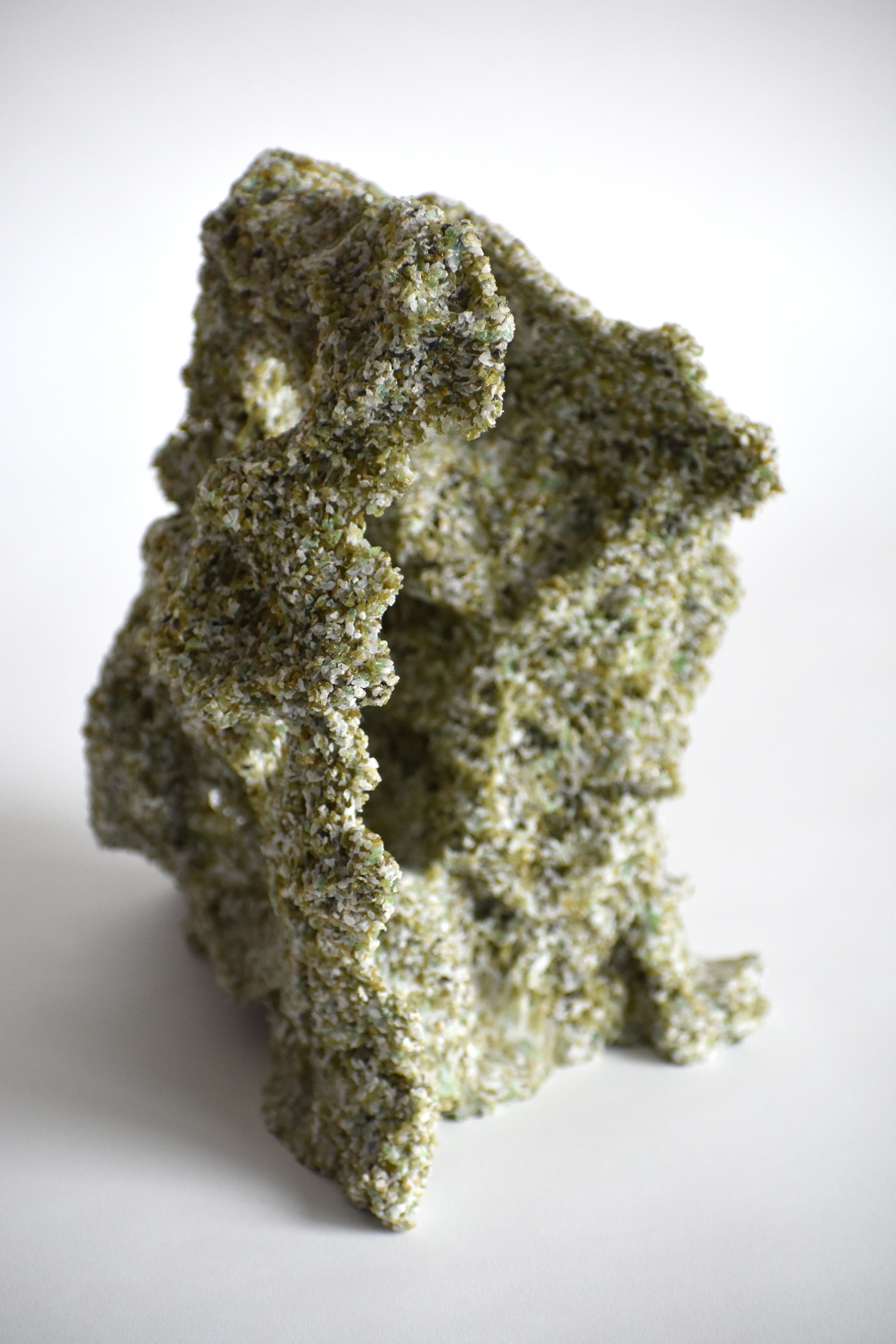
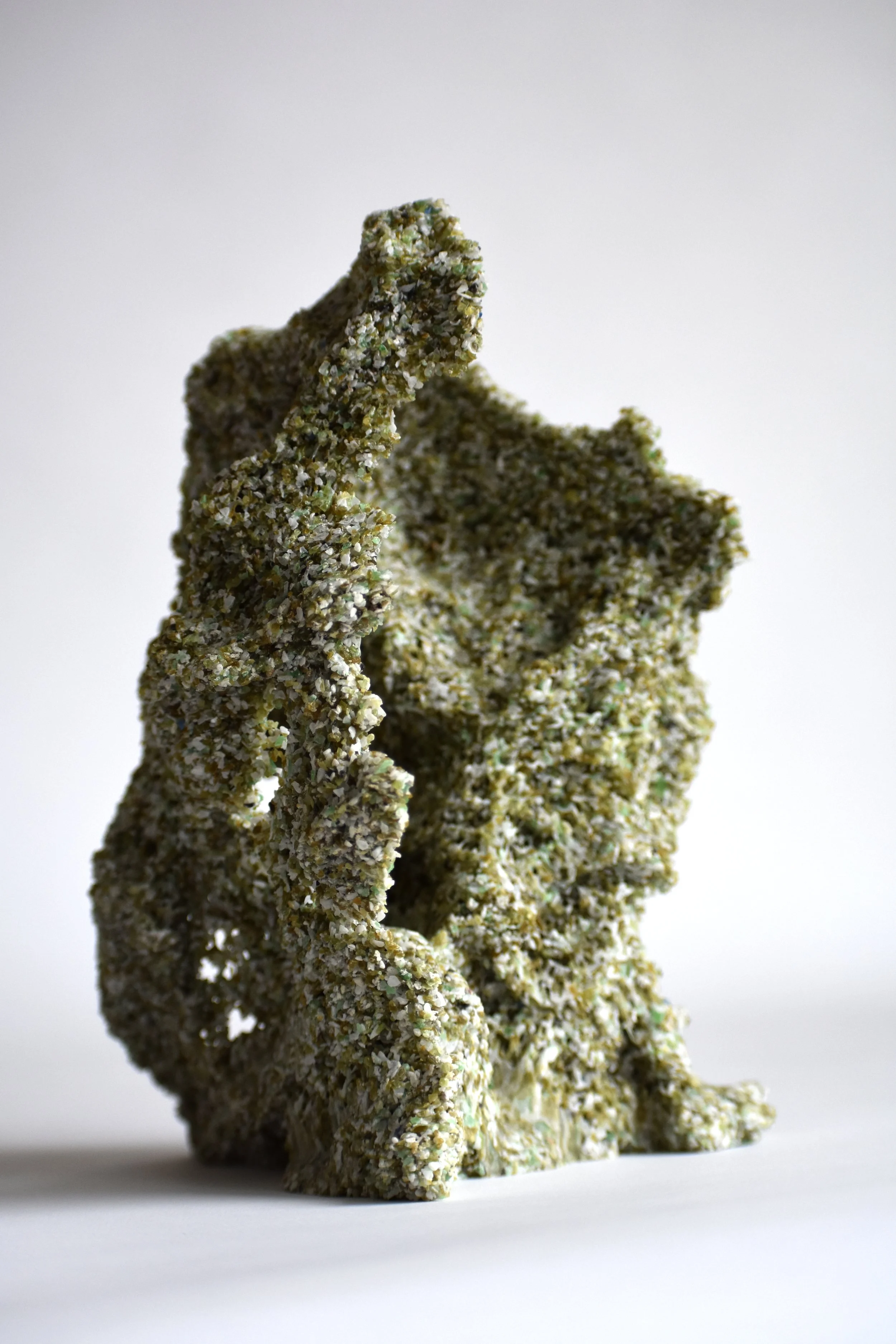
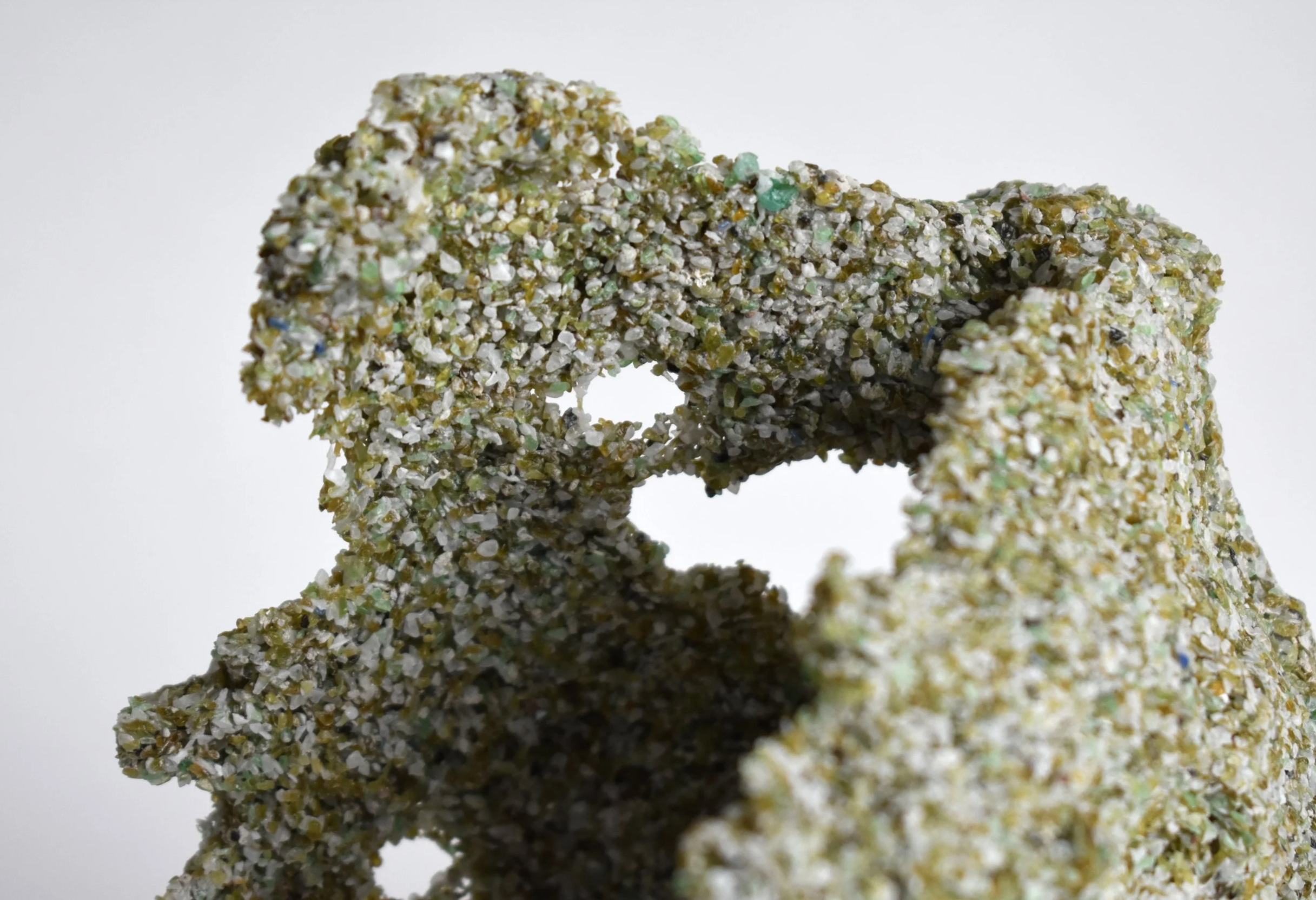
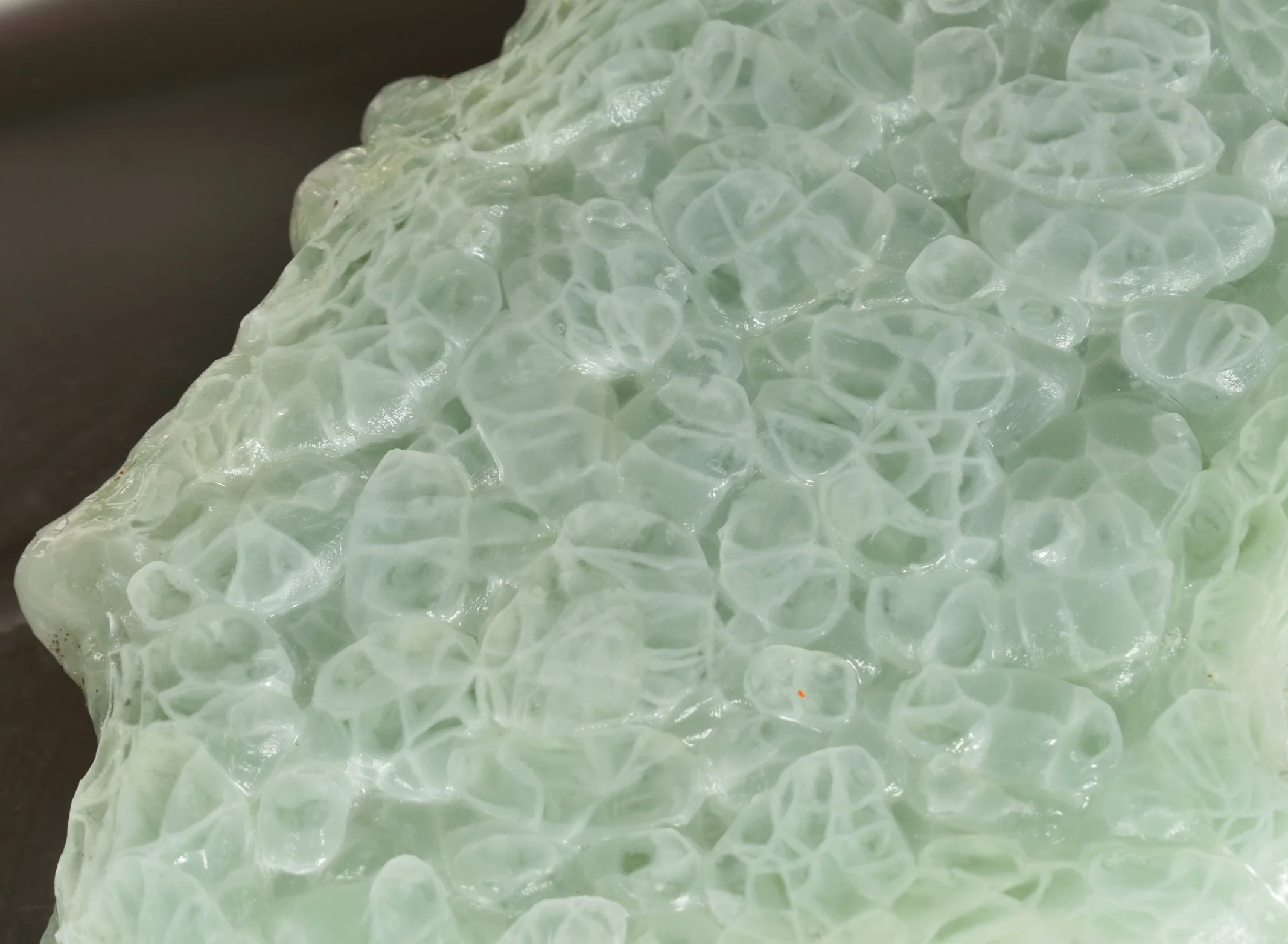
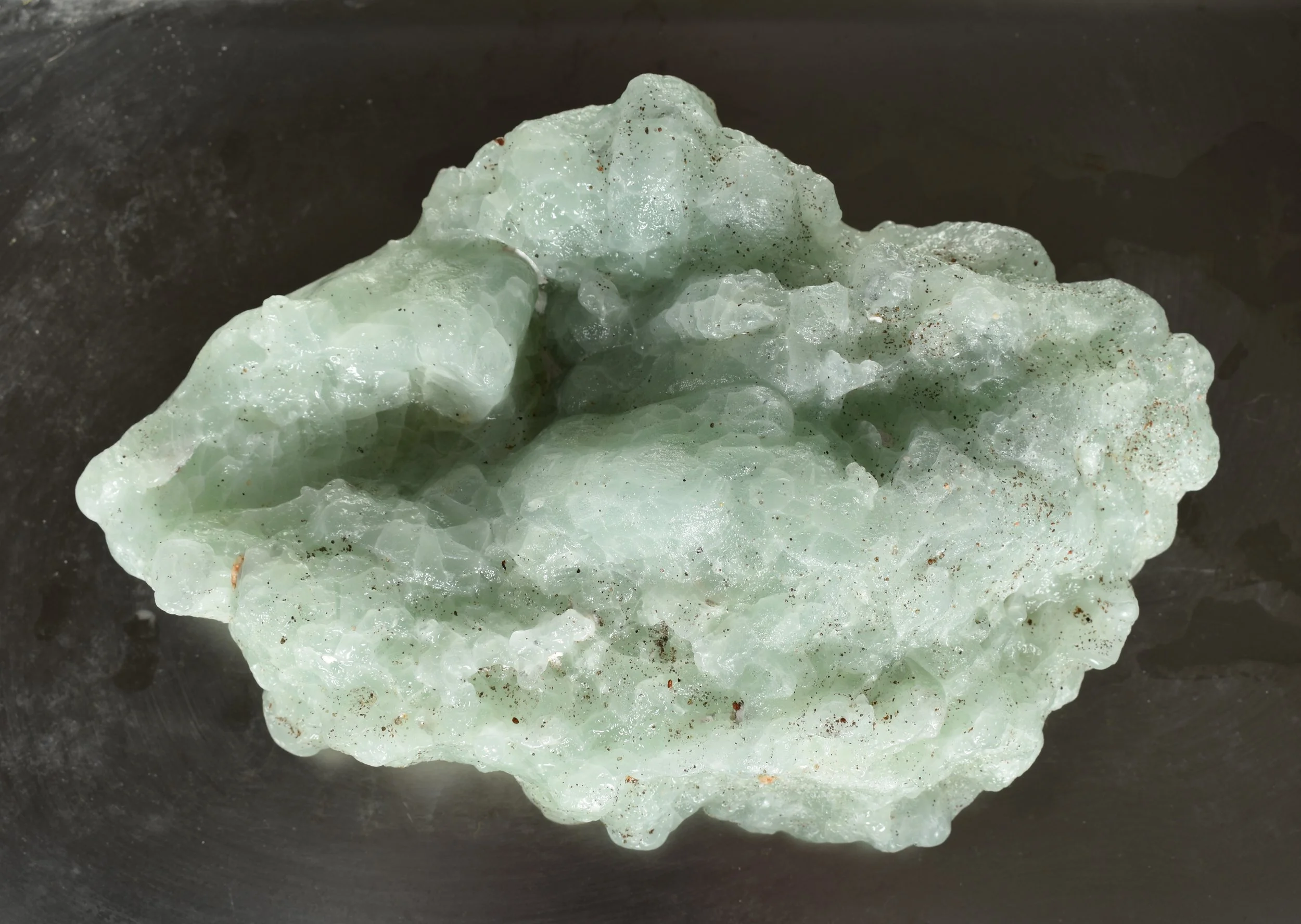
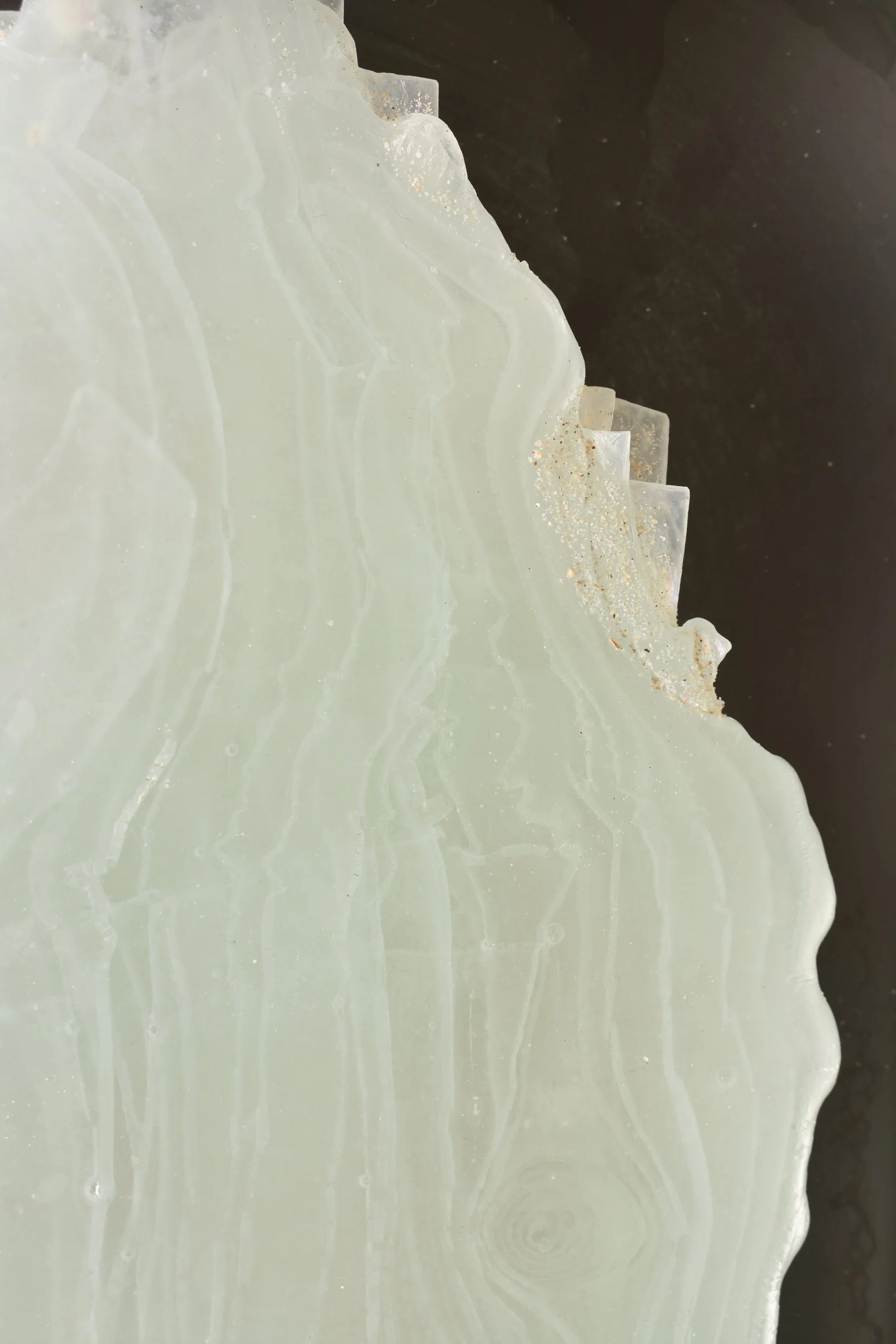
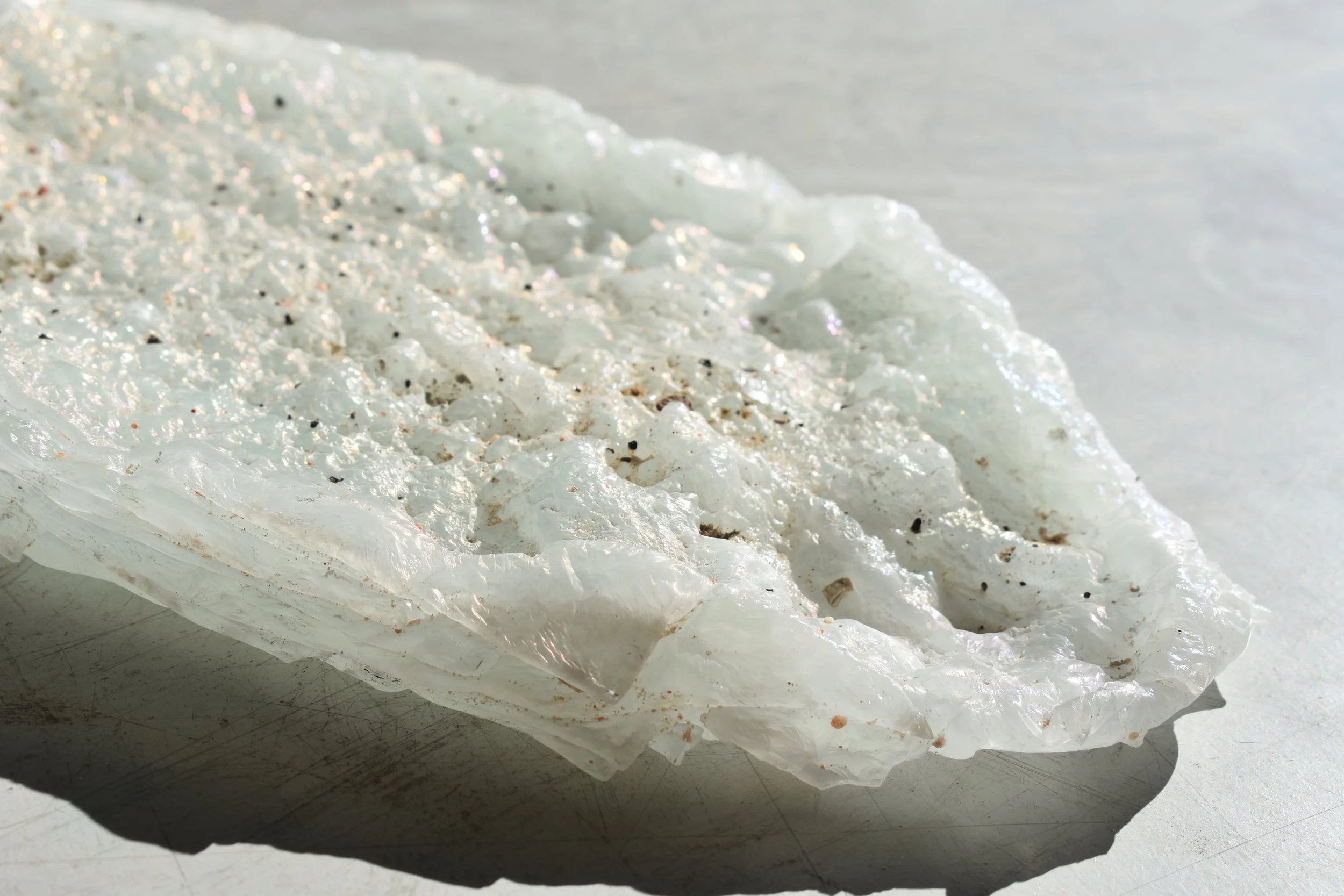
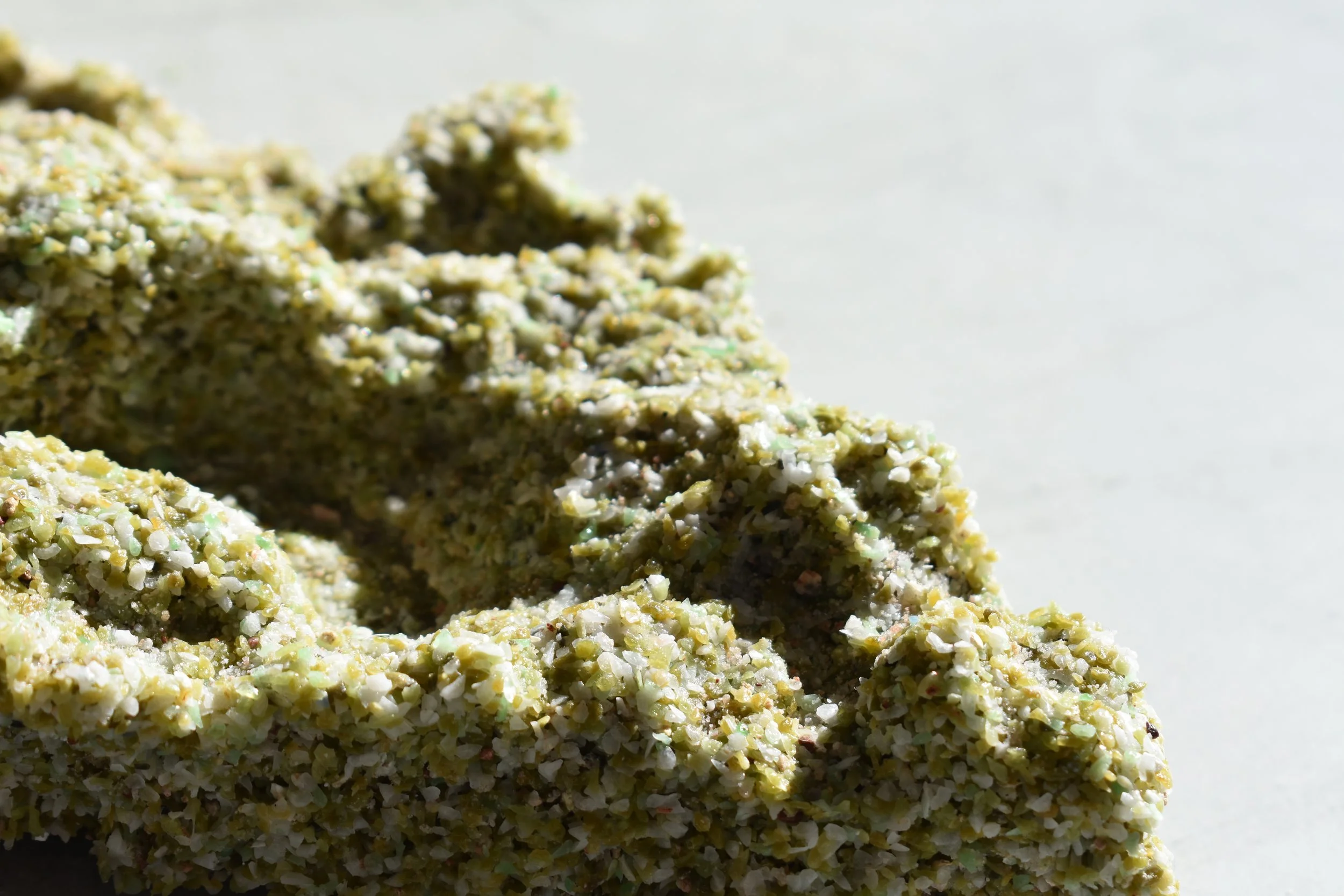
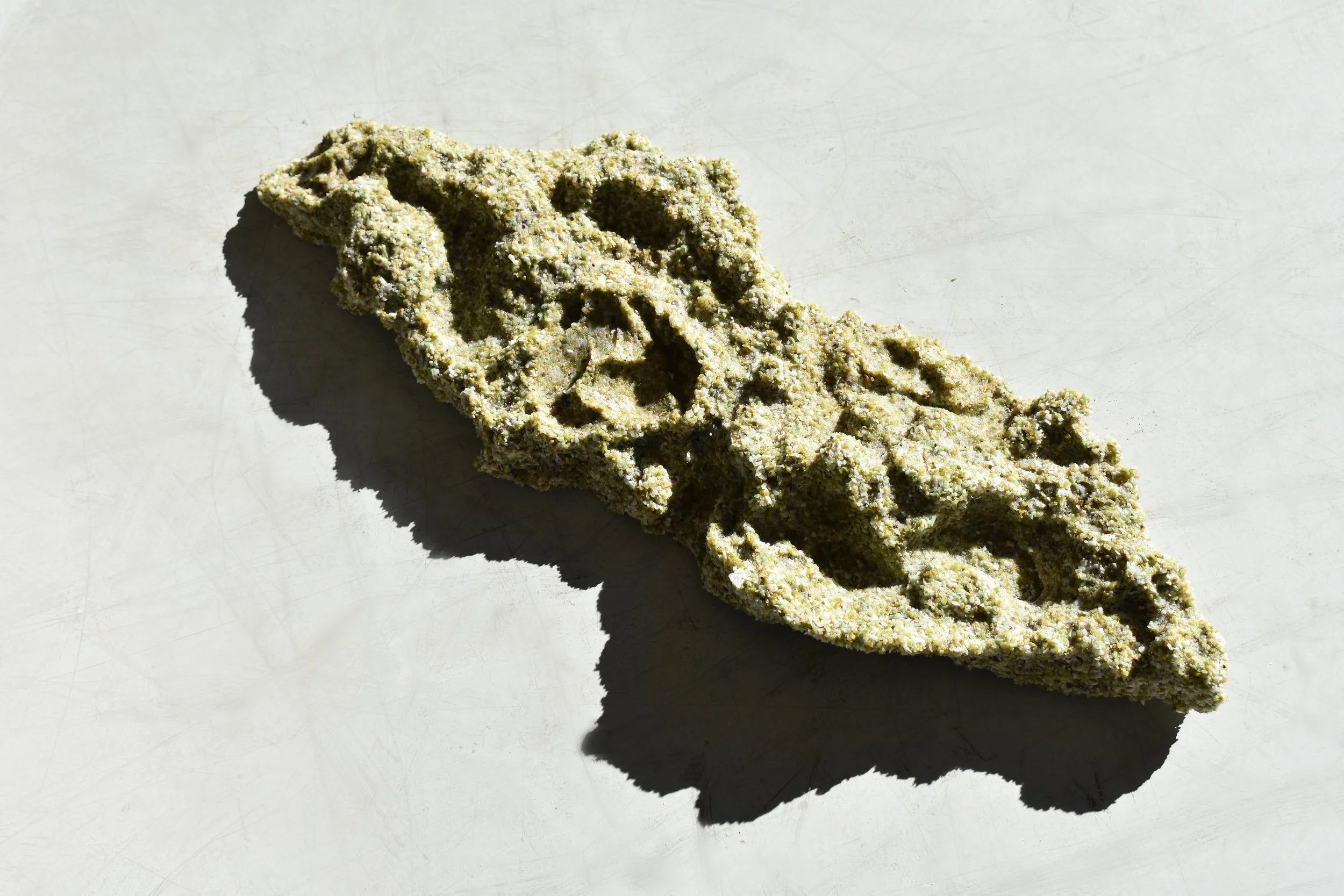
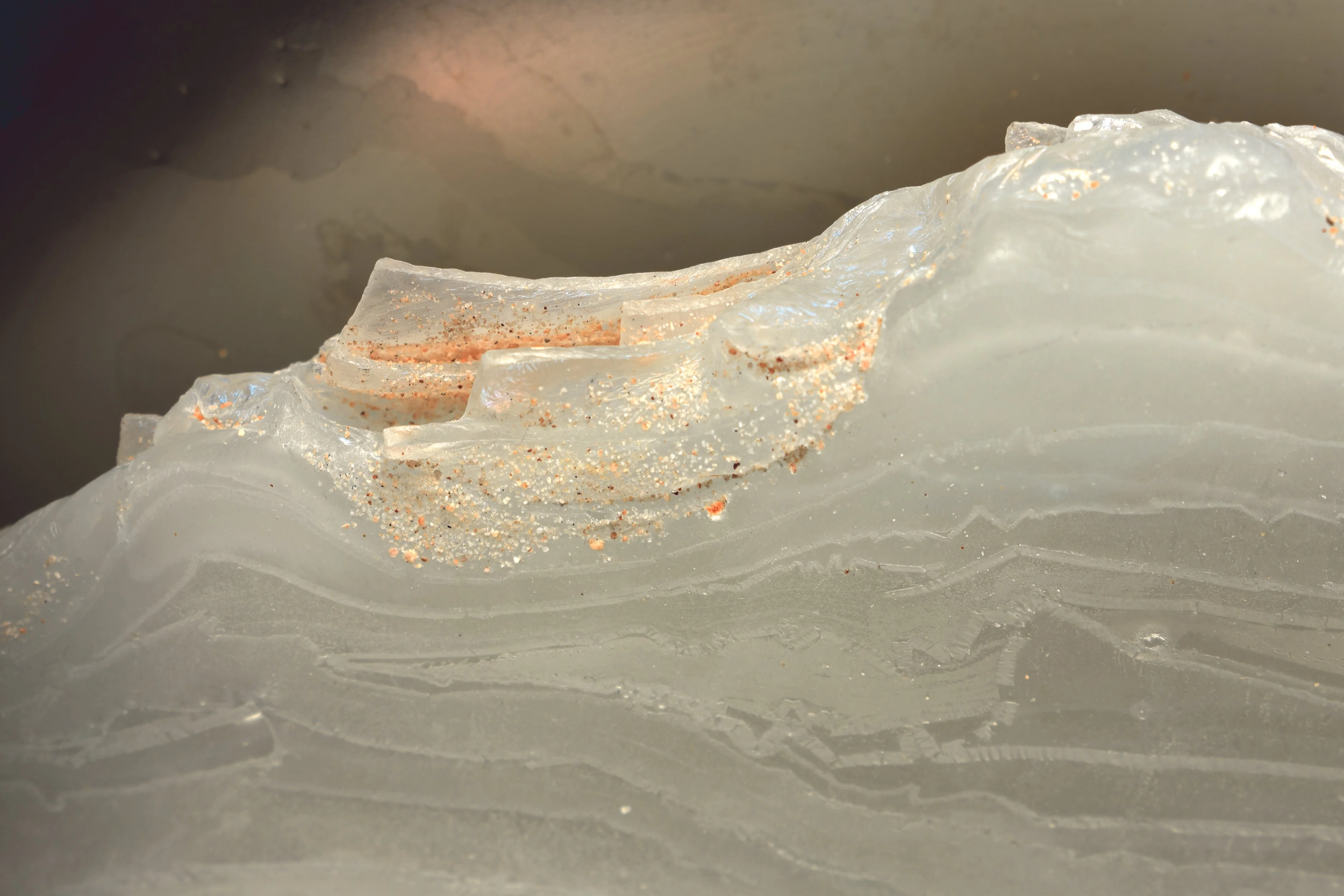
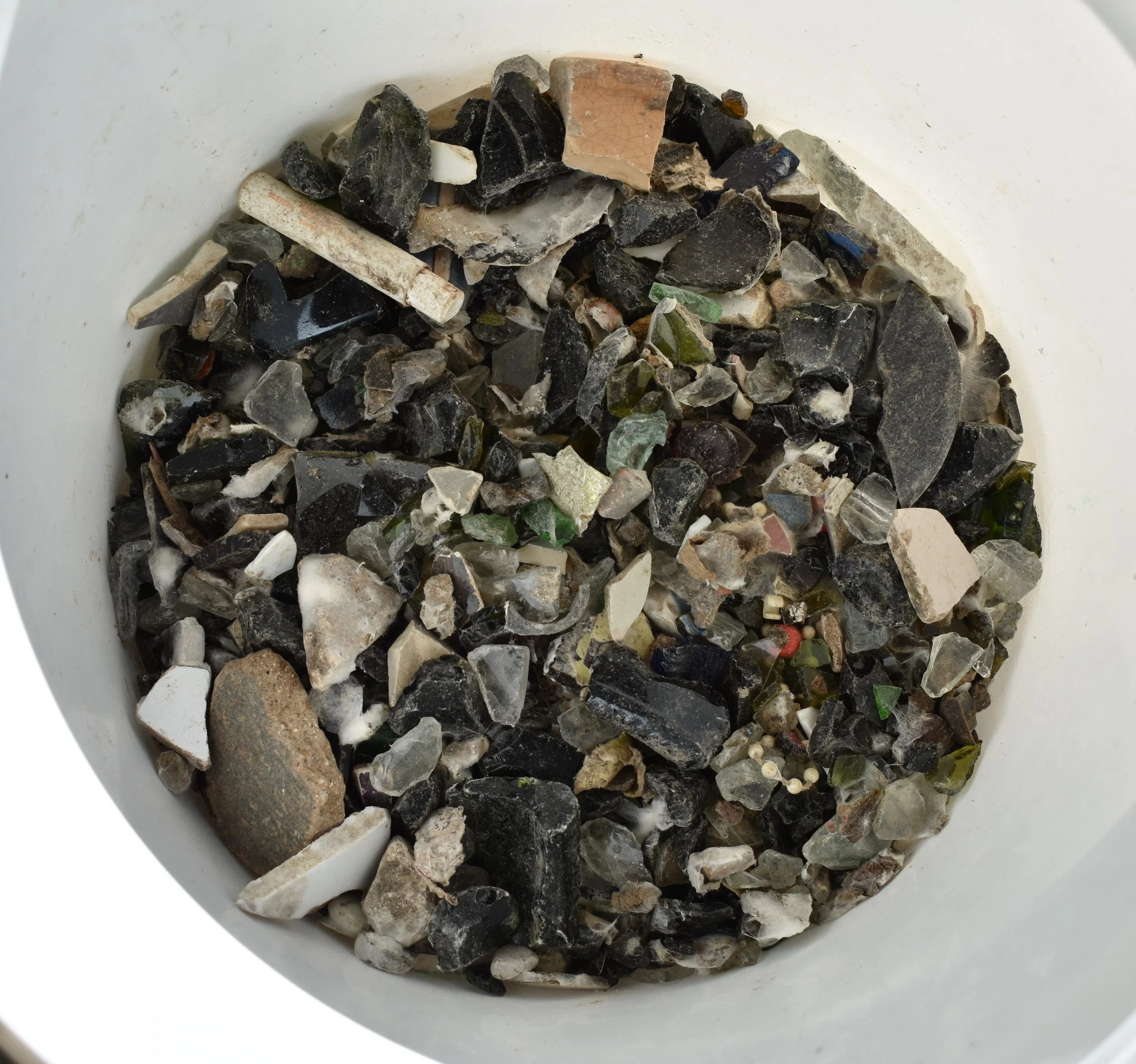
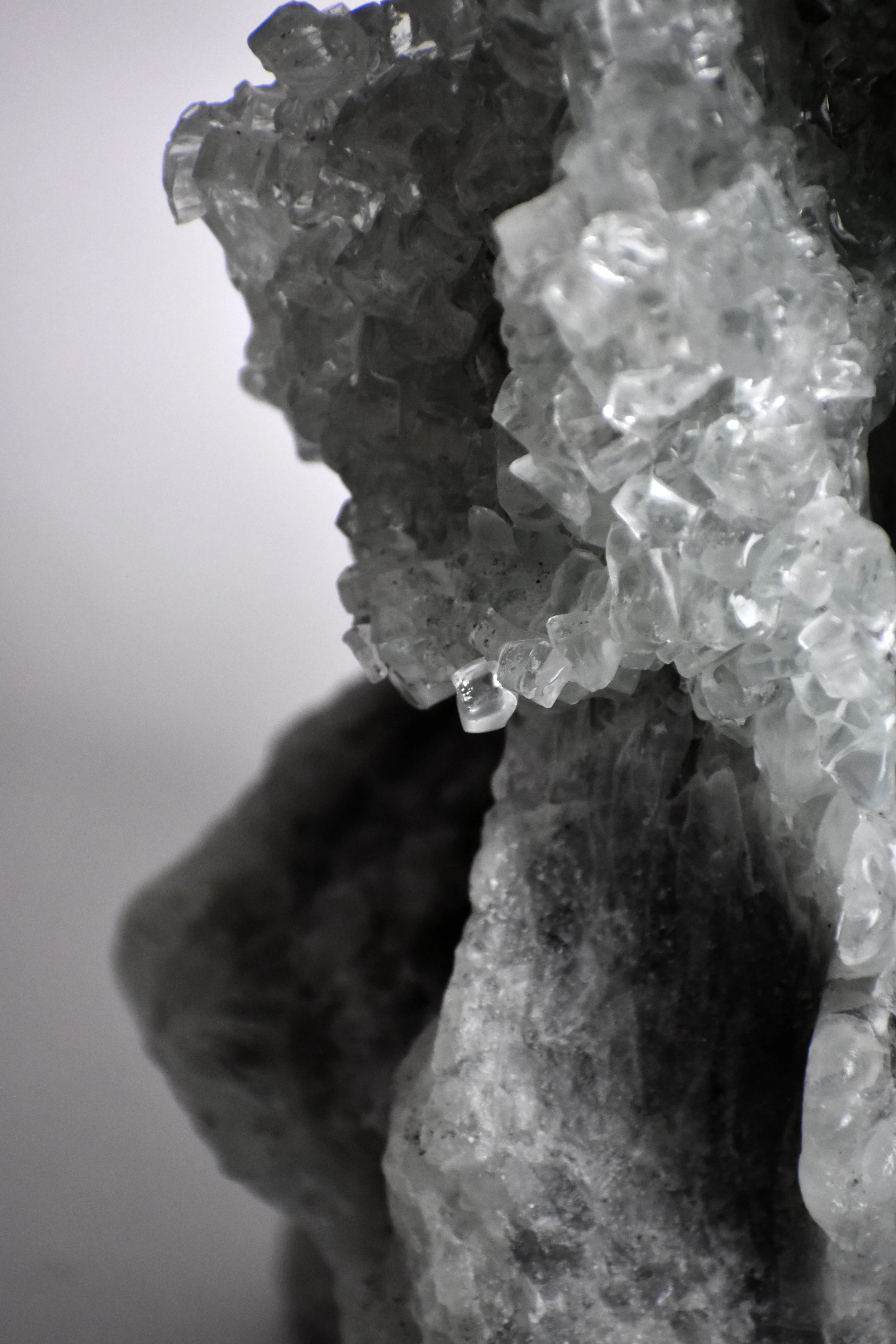
Drawing parallels between glassmaking and geological formation, my practice frames kiln-formed glass as an accelerated geological process that compresses deep-time transformations into perceptible human timescales. Through contaminated waste glass and sand casting, I embrace contamination as an aesthetic and conceptual force that embodies the volatility of disrupted landscapes. By developing an interdisciplinary framework that integrates environmental philosophy, contemporary art, and material studies, the research proses sculptures as thinking models.
These thinking models encapsulate extraction, transformation, and contamination, interconnected processes that define the Anthropocene. The sculptures become a path through which to sense the abstract, complex, and immersive scale of landscape transformation occurring in the Anthropocene.